
Specify Seamless 304 or 316 Stainless Tube from the Service Conditions
HGW Hydraulics on Sep 17th 2024
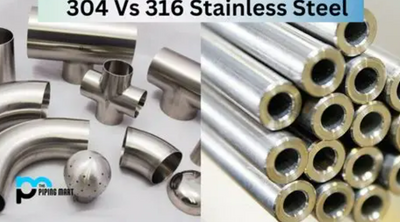
Choosing seamless stainless tube starts with the fluid, environment and governing product specification. The absence of a longitudinal weld describes how the tube was made; it does not by itself establish pressure capability, cleanliness or corrosion life.
Grade selection is only one part of the purchase description. Outside diameter, wall thickness, tolerance, heat treatment, surface condition, test method and material documentation determine whether a length of tube can be used in the intended system.
Separate tube construction from completed-line performance
Seamless tube is commonly produced by piercing or extruding a solid hollow and then reducing it to final dimensions. This avoids a continuous seam in the tube wall, which can be useful when the applicable design code, size range or customer specification calls for seamless construction.
Long process lines still need joints. Field or shop welds, fittings, valves and transitions remain part of the pressure boundary. A buyer should therefore compare the rating of the complete installation, not assume that a seamless tube removes every weld or leak location.
Use 304 for controlled general-corrosion service
The 304 family is widely used for general industrial, food-handling and clean-fluid equipment. Chromium supports formation of the passive surface film, while nickel helps stabilize the austenitic structure. Actual suitability depends on the exact media, concentration, temperature, cleaning chemistry and possibility of deposits or crevices.
An indoor water or air line may present a very different risk from an outdoor line exposed to deicing salt. Calling both applications “stainless service” is not enough to select the grade.
Choose the carbon variant for the fabrication route
304L has a lower maximum carbon limit than standard 304. It is often specified where welding could otherwise reduce corrosion resistance in the heat-affected area. The welding procedure, filler, heat input, joint design, cleaning and post-weld condition still need control; an L suffix does not correct poor fabrication.
304H has a controlled higher-carbon range for certain elevated-temperature applications where high-temperature strength is part of the design basis. It should not be substituted from a general description such as “hot and high pressure.” Confirm the material standard, allowable stress, temperature exposure and code requirements for the actual equipment.
Evaluate 316 for chloride exposure without treating it as immune
The molybdenum addition in 316 generally improves resistance to localized attack in chloride-bearing environments compared with 304. That can support its use in some marine, washdown, water-treatment and chemical services. Chloride concentration, temperature, oxygen, crevices and stagnant deposits can still challenge 316.
316L is commonly paired with welded fabrication for the same carbon-control reason that favors 304L. If exposure exceeds the useful range of 316L, the next step is a documented corrosion review, not an automatic claim that any stainless tube will survive.
Put a complete tube description on the order
Record the alloy and product standard, seamless construction, dimensions and tolerances, heat-treatment condition, surface finish, end condition and required examination. For an instrumentation run, also confirm compatibility with the chosen tube-fitting system, including hardness and ovality limits.
Review certificates against the purchase order and keep heat or lot identity where traceability is required. This approach makes 304 versus 316 a service-based engineering decision rather than a shorthand comparison of two alloy names.