
304 vs 316 Stainless Hose Ends: Chlorides, Corrosion, and Selection
Jan 24th 2023
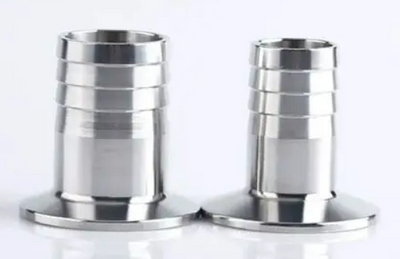
304 and 316 are both austenitic stainless steel families used for fittings and fluid-system components. Their shared chromium content supports formation of a passive oxide film. The practical difference is that 316 normally includes molybdenum, which improves resistance to pitting and crevice corrosion in many chloride environments.
That advantage is meaningful, but grade selection still depends on concentration, temperature, deposits, cleaning, fabrication, and the consequence of corrosion. “Stainless” and “marine grade” are not complete service specifications.
What 304 provides
304 is often described as 18/8 stainless because common compositions contain about 18 percent chromium and 8 percent nickel. Exact limits come from the applicable material specification. It offers useful corrosion resistance, formability, weldability, and availability for general industrial, food-equipment, and fabricated components.
The passive film comes from chromium—not zinc. Carbon-steel or zinc contamination during machining and handling can create rust staining and should be controlled. Cleaning and passivation may be specified after fabrication.
304 can pit in chloride exposure, especially as chloride concentration and temperature rise or when crevices and deposits prevent the surface from repassivating. That makes service details more important than a general indoor-versus-outdoor label.
How 316 changes chloride resistance
316 contains molybdenum in addition to chromium and nickel. This generally increases resistance to localized chloride attack and makes the grade common in chemical, coastal, washdown, and process environments.
It is not immune to seawater, hot chlorides, strong chemicals, or stagnant crevices. A more highly alloyed stainless or another material may be required. Compatibility should be checked against actual media and temperature data.
Molybdenum does not automatically make machining easier, and the cost difference from 304 is not a fixed multiplier. Alloy markets, form, size, machining, quantity, and availability determine purchase cost.
Hose-end performance includes more than body alloy
The fitting stem and ferrule must be compatible with the exact hose and crimp specification. External connection—JIC, ORFS, ORB, NPT, BSP, metric, flange, or another type—must match the port and sealing method. O-ring material must suit fluid and temperature.
Stainless threads can gall, particularly under high friction or improper assembly. Use the fitting manufacturer's lubrication and torque procedure and keep sealing faces clean. Do not apply a generic anti-seize compound where it could contaminate hydraulic media or change required torque without approval.
Choose from the corrosion mechanism outward
Use 304 where its general corrosion resistance and fabrication characteristics meet the media and environment. Consider 316 where chloride pitting or a more aggressive compatible process justifies the additional alloying. For severe conditions, evaluate other alloys instead of assuming 316 is the final step.
Document grade through material records and inventory identification. A visually identical 304 replacement can erase the reason 316 was specified on an exposed assembly. Conversely, substituting 316 adds cost without correcting a leak caused by a wrong seat, damaged O-ring, or incompatible hose.
The right grade protects the fitting body from the identified environment. The right hose-end design still requires matching pressure, temperature, fluid, connection, assembly, and maintenance conditions.