
Qualify Welded 304 or 316 Stainless Tube by Seam Process and Service
HGW Hydraulics on Oct 3rd 2024
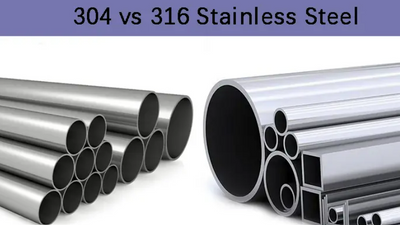
Welded stainless tube can be an efficient choice for long runs, consistent dimensions and commonly stocked sizes. Its suitability is established by the material standard, seam manufacturing controls and completed-tube testing, not by a simple rule that welded construction is low pressure.
Before comparing 304 with 316, define what the tube will carry, how it will be fabricated and what the installed line must withstand.
Follow the manufacturing path through the seam
Production normally begins with stainless strip or coil formed into a round section. The abutting edges are welded continuously, after which the tube may be sized, heat treated, cleaned, straightened and finished as required by its specification.
The seam process and subsequent treatment affect microstructure, geometry and corrosion behavior. Examination may include eddy-current, ultrasonic, hydrostatic or other tests depending on the standard and purchase requirements. A generic statement that the tube was “pressure tested” is incomplete without the applicable acceptance basis.
Match 304-family tube to fabrication and exposure
304 offers useful general corrosion resistance for many indoor, sanitary and industrial applications. When the tube or completed piping will be welded, 304L is frequently chosen to reduce sensitization risk in the heat-affected zone because its carbon maximum is lower.
That grade choice must be supported by a qualified welding procedure and appropriate cleaning. Heat tint, embedded iron, crevices or an unsuitable filler can compromise a line even when the base material certificate says 304L.
Introduce 316 only when the corrosion case calls for it
316 and 316L include molybdenum, which generally improves resistance to chloride-driven pitting compared with the 304 family. They may be justified for selected coastal, marine, washdown, water-treatment or chemical environments.
The improvement is relative, not absolute. Warm chlorides, deposits and poorly drained crevices can attack 316 as well. Specify 316L for welded fabrication when the design needs the lower-carbon grade, and assess more resistant materials separately if exposure is more severe.
Compare welded and seamless tube using the same design inputs
Wall thickness, diameter, tolerances, material condition, joint efficiency where applicable, design code, pressure, temperature and cyclic duty all influence allowable service. Seamless tube is not automatically stronger in every size, and welded tube is not automatically acceptable merely because it is available in a long coil or length.
Welded construction can reduce the number of field joints and may offer economical size availability. Seamless construction may be required by a customer, code, process or particular size-and-pressure combination. The correct comparison uses certified products against the same design requirement.
Inspect the delivered tube as a controlled component
Check grade, heat or lot identity, outside diameter, wall, ovality, straightness, surface and ends. Review the certificate and required test results. If compression tube fittings will be installed, confirm tube hardness and dimensional compatibility with that fitting system.
Protect cleaned material during storage and cutting, and preserve traceability through fabrication where required. A defensible welded-tube selection connects the service environment to the alloy, the seam process and the finished-tube acceptance record.