
Escalate from 316 to Duplex or Super Duplex Only for a Defined Corrosion Case
HGW Hydraulics on May 23rd 2024
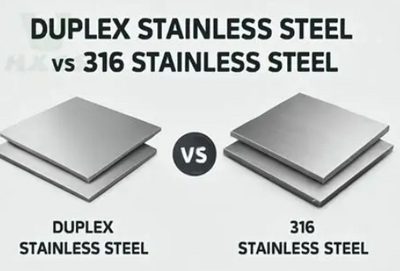
316L, duplex, and super duplex stainless steels are not three universal quality levels. Each is an alloy family with particular corrosion, mechanical, fabrication, and temperature behavior. A material escalation should respond to a defined chloride, strength, or stress-corrosion problem and should be verified in the finished fitting, valve, tube, or welded assembly.
Establish the environment in engineering terms
Record fluid chemistry, chloride concentration, pH, oxidizing or reducing conditions, temperature, pressure, deposits, flow, crevices, cleaning chemicals, external salt exposure, and required design life. Seawater, brine, warm process solution, brewery washdown, and atmospheric marine spray are different exposures.
Corrosion-resistance numbers and alloy names are screening tools. Service data, standards, material producer guidance, testing, and responsible engineering should support critical selection.
Use 316 and 316L within their actual window
316 is an austenitic chromium-nickel stainless containing molybdenum. It often improves resistance to pitting and crevice attack compared with 304 in many chloride environments and retains useful toughness over a broad temperature range. 316L has lower carbon, which can reduce sensitization concerns in certain welded fabrication.
Warm chlorides, stagnant crevices, deposits, and tensile stress can still produce pitting, crevice corrosion, or chloride stress-corrosion cracking. A 316L label does not guarantee seawater service. Surface finish, welding, passivation or cleaning, and assembly geometry influence performance.
Understand what duplex microstructure changes
Duplex stainless combines ferritic and austenitic phases in a controlled microstructure. Many duplex grades provide higher yield strength and improved resistance to chloride stress-corrosion cracking and localized corrosion relative to common austenitic grades.
The benefit comes with process control. Chemistry, heat treatment, phase balance, intermetallic precipitation, forming, welding heat input, filler, and post-fabrication condition matter. Magnetism can help distinguish duplex from fully austenitic material, but it cannot identify grade or prove acceptable phase balance.
Higher strength may permit a different design thickness when the governing code and product qualification allow it. It must not be converted into an automatic thinner fitting or higher pressure without a new design calculation and rating.
Reserve super duplex for severe qualified duty
Super duplex grades such as UNS S32750 use higher chromium, molybdenum, and nitrogen than many standard duplex alloys and can offer strong localized-corrosion resistance with high mechanical strength. They appear in desalination, offshore, chemical, pulp and paper, heat-exchanger, and demanding oil-and-gas systems.
They still have temperature and fabrication limits, can form harmful phases under improper thermal cycles, and may require specialized welding and inspection. Extreme corrosion claims should not be carried from raw alloy data to a machined fitting without product-level evidence.
Check the weakest material and the connection design
An expensive body alloy cannot protect an incompatible O-ring, weld, brazed joint, fastener, spring, tube, or mating port. Dissimilar metals can introduce galvanic effects. Crevices under clamps and deposits can defeat nominal bulk resistance.
Pressure rating depends on component geometry, size, manufacturing, seal, temperature, standard, and test basis. Confirm that the needed JIC, ORFS, ORB, BSP, NPT, metric, flange, tube fitting, or valve is actually produced and qualified in the selected grade.
Include sourcing and documentation in the decision
316 components are broadly available. Duplex and super duplex bar, tube, forgings, fittings, filler, and qualified fabrication may have longer lead times or minimum quantities. State UNS or EN grade, material condition, product standard, heat records, mechanical and corrosion test requirements, and traceability.
Approve alternates before an outage and protect grade identity through machining, cleaning, marking, and storage. A mixed part labeled only “stainless” loses the value of the alloy decision.
The correct escalation follows evidence: 316 or 316L where its documented performance fits; duplex where strength and chloride stress-corrosion resistance justify controlled fabrication; super duplex where the severe exposure and qualification support its cost and complexity. More alloy is useful only when it addresses the actual failure mechanism.