
Specify Brass Fittings by Connection Style, Alloy, and Service Approval
HGW Hydraulics on Nov 1st 2023
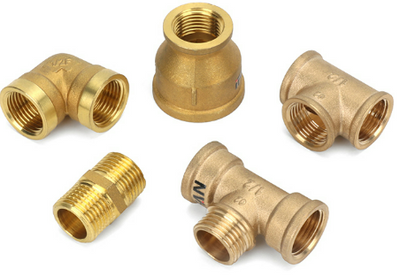
Brass is easy to machine and form, conducts heat and electricity, and resists corrosion in many environments. Those properties support a broad fitting range, but they do not give every brass connector the same pressure, temperature, fluid compatibility, or regulatory approval. Start with the connection style and exact service.
Pipe-thread brass fittings need a defined seal
Straight adapters, elbows, tees, crosses, bushings, caps, and plugs are often machined or forged from brass. NPT and other tapered pipe ends normally use controlled thread interference with an approved sealant. Parallel threads may need a washer, O-ring, cone, or other face.
Identify thread family, nominal size, taper, male or female end, body shape, and sealing method. Brass can be softer than some steel mating components, so cross-threading and over-tightening can distort the fitting or port. A product rating for one size should not be extended to a larger size.
SAE 45-degree flare fittings seal at the tube cone
Brass 45-degree flare fittings are common in refrigeration, automotive, fuel, gas, pneumatic, and suitable fluid-transfer work. The tube is prepared to the correct flare and clamped against a matching seat. The straight threads provide load, not the primary seal.
Do not mate a 45-degree flare to a JIC 37-degree seat even if the threads engage. Confirm tube material, outside diameter, wall, flare preparation, nut and sleeve, fluid, temperature, and component rating. Refrigerant, fuel gas, brake, and other regulated services can require listed or specifically approved products and procedures.
Compression and instrumentation fittings are complete systems
Single-ferrule and twin-ferrule brass compression fittings use controlled components to grip and seal tube without forming a flare. The body, nut, ferrule or ferrules, tube OD, wall, hardness, and assembly instruction must match.
Instrumentation, sampling, pneumatic controls, and process measurement can use these fittings, but gas service and higher consequence applications need product-specific qualification. A double-ferrule layout does not by itself prove a particular pressure or vibration capability.
Hose barbs and swivel ends solve different problems
A hose barb retains compatible hose through designed interference and, in many systems, a specified clamp or ferrule. Match barb diameter and profile to hose inside diameter, material, wall, pressure, temperature, and pull-off requirement. A utility air or coolant barb should not be moved into a high-pressure hydraulic circuit from appearance alone.
A swivel hose or tool connection can improve maneuverability and reduce torsion. Determine whether it turns only during installation or is rated for live movement. Dynamic seals, pressure, speed, side load, and inspection differ from a simple swivel nut.
Select brass alloy for water and chemical exposure
Brass is primarily a copper-zinc alloy, but composition and processing vary. Some water chemistries can promote dezincification in susceptible alloys. Ammonia-bearing environments and certain chemicals can also create problems. Potable water, plumbing, gas, D.O.T. air-brake, medical, and food applications may have material, lead-content, listing, or approval requirements.
Do not describe brass as universally corrosion resistant. Confirm the exact alloy and product compliance for the media and jurisdiction. Dissimilar metals, condensation, salt, temperature, and external cleaning chemicals belong in the review.
Use the finished fitting’s rating
Published pressure and temperature depend on fitting style, size, alloy, tube or hose, seal, and manufacturer. Broad values quoted for brass material are not safe selection limits. Temperature can reduce allowable pressure or affect seals, while a tube wall may control the assembly before the fitting body does.
For purchasing, specify connection on both ends, material or alloy, tube or hose details, fluid, pressure and temperature, environment, required standard or listing, and documentation. Brass offers useful ductility, machinability, conductivity, and product variety only when those material advantages are paired with the correct connection and service approval.