
Choose Brass or Stainless Fittings from Alloy, Connection, and Exposure
HGW Hydraulics on Apr 2nd 2024
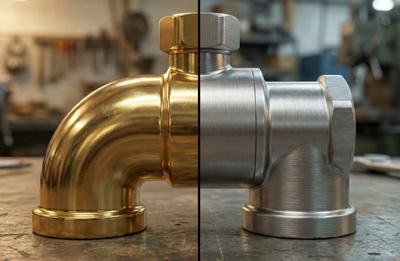
Brass and stainless steel can both be appropriate fitting materials. Their usefulness cannot be reduced to brass for low cost and stainless for high pressure. Alloy composition, fitting geometry, size, seal, joining process, media, temperature, external exposure, and product qualification decide the finished component’s performance.
Specify the alloy rather than the color
Brass is a family of copper-zinc alloys with different lead content, machinability, strength, corrosion behavior, and forming characteristics. A forged brass elbow, machined bar-stock adapter, and dezincification-resistant potable-water fitting may use different compositions.
Stainless is also a family. 304 serves many general environments; 316-family material often improves pitting resistance in chlorides because of molybdenum. Low-carbon or stabilized grades can matter for welding and heat exposure. None is corrosion proof.
Appearance cannot verify material or compliance. Record grade, governing material specification, heat or lot evidence where required, and any potable, sanitary, gas, transportation, or customer approval.
Evaluate the actual corrosion path
Brass resists many water and atmospheric conditions but can suffer dezincification, stress-corrosion cracking in susceptible environments, erosion, or attack from particular chemicals. Water chemistry, temperature, disinfectants, ammonia-bearing exposure, stagnation, and flow influence the result.
Stainless can pit or corrode in crevices under chloride deposits, and dissimilar-metal contact can shift galvanic attack. Cleaning chemicals, concentration, drainage, and temperature are as important as a general “saltwater” or “chemical” label.
Separate the internal fluid from the external environment. The O-ring, hose, tube, plating on a mating component, and sealant may be less compatible than either fitting body.
Use the fitting rating, not bulk material strength
Tensile strength or a broad alloy temperature range does not establish fitting working pressure. Connection standard, body wall, thread or flare geometry, size, manufacturing, seal, mating tube or hose, temperature, and test basis control.
A brass compression fitting in one size and a stainless hydraulic adapter in another cannot support a universal 3,000-versus-10,000-psi comparison. Use the current manufacturer data for the exact product and complete assembly. Burst capability is not a working target.
At elevated temperature, allowable stress and elastomer capability can change. Brass conductivity can transfer heat quickly, but high conductivity is not the same as high allowable service temperature. Stainless has lower thermal conductivity but a particular seal or process may still limit it.
Compare manufacturing and field assembly
Brass is valued for machinability, formability, and the ability to produce small precise fittings. Stainless machining can require different tools and controls. Welding or brazing suitability depends on exact alloy, filler, joint design, cleanliness, procedure, and service; neither material is universally easier to weld.
Stainless threads can gall, especially with similar materials and unsuitable lubrication. Brass can deform under excessive wrench force. Follow connection-specific torque or engagement instructions and use approved lubricant or sealant only where the design calls for it.
Match common applications without turning them into rules
Brass appears in instrumentation, pneumatics, refrigeration, fuel, gas, water, hose barb, compression, and 45-degree flare systems. Stainless appears in hydraulic, marine, chemical, high-purity, washdown, and process systems. Each application can impose standards or listings beyond material choice.
For an NPT end, check tapered-thread sealant and port strength. For JIC, inspect the 37-degree seat. For ORB or ORFS, select the O-ring compound. Material cannot correct a wrong thread or sealing surface.
Compare total installed cost
Brass may reduce purchase and machining cost in a compatible service. Stainless may reduce corrosion replacement where exposure is severe. Include adapters, tools, assembly time, inspection, availability, downtime, and disposal. Do not assign a fixed fifty-year life or a universal maintenance advantage without application evidence.
The purchase description should state alloy, connection on both ends, seal, pressure and temperature, media, external exposure, required approvals, and documents. With that information, brass and stainless are selected for the specific job rather than ranked by unsupported material slogans.