
Decode BSP Fittings from Thread Form to the Actual Sealing Surface
HGW Hydraulics on Jul 11th 2023
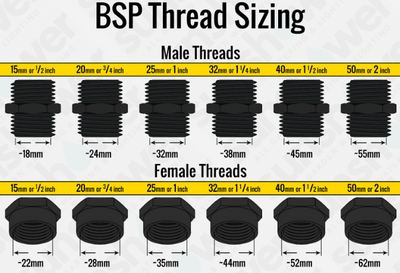
BSP identifies a British pipe-thread family. It does not identify pressure rating, fitting material, or one universal way to seal. Buyers need to separate the parallel and tapered forms, then document the face, washer, cone, O-ring, or thread interference that the specific component uses.
That process matters in the United States because imported pumps, valves, cylinders, coolers, sensors, and attachments can introduce BSP ports into equipment that otherwise uses JIC, ORB, NPT, or metric connections.
Read the thread as one part of a connection system
BSP threads use the 55-degree Whitworth profile with characteristic crest and root geometry. Pitch is stated in threads per inch, while the size name is nominal and does not equal a caliper reading across the male thread.
The standard family originated in British pipe practice and is now used far beyond the United Kingdom. It appears across European, Asian, Australian, African, and global industrial supply chains. Country of origin can suggest what to check, but measurement must confirm the part.
Separate BSPP from BSPT before choosing a seal
BSPP uses parallel threads. The diameter remains substantially constant over the threaded length. Those threads hold the fitting in place, while the intended seal is made elsewhere. Common arrangements include a bonded washer or elastomer at a shoulder, a captive port seal, an internal cone, or another specified face.
BSPT uses tapered threads. Male and female thread engagement develops interference as the fitting is tightened, and a compatible pipe-thread sealant is normally used where the design calls for a pressure-tight threaded joint. The exact male and female designations and permissible combinations should follow the governing component standard.
Do not turn these descriptions into absolutes. A BSPP adapter without a visible washer may seal on an internal seat, and the other end of a BSPT adapter may use an entirely different connection. Inspect both sides.
Measure nominal size, pitch, taper, and seal evidence
Begin only after equipment is isolated and stored energy is released. Clean residual sealant without damaging threads. Measure male diameter at appropriate locations, use a pitch gauge, determine whether the thread is parallel or tapered, and compare the results with a recognized BSP chart or gauge.
Look at the mating component. A machined spotface, counterbore, cone, chamfer, washer witness mark, or O-ring provides evidence about the seal. Worn first threads, corrosion, and a short thread can make taper difficult to judge, so no single measurement should carry the whole decision.
Nominal pipe sizes are especially easy to misread. Do not round the outside diameter to a familiar inch or metric number. Record the verified BSP size and form with the sealing arrangement.
Do not cross NPT and BSP by feel
NPT uses a 60-degree thread form and different gauge dimensions. Some nominal sizes have pitches close enough that an NPT and BSP part may start together. Partial hand engagement or growing wrench resistance is not proof that the flanks, taper, thread length, or seal are correct.
Forcing the combination can tear threads, distort a port, and create a joint that leaks after pressure or temperature cycling. Tape and compound cannot convert the geometry. Use a purpose-built BSP-to-NPT adapter when the two systems must meet, with each end fully specified and rated.
Metric threads are another separate family. They use millimeter diameter and pitch and may seal through an O-ring, face, cone, or other feature. An imported machine can use BSP and metric connections in nearby locations, making an OEM name or visual comparison unreliable.
Match the sealant to the connection and service
For a BSPT threaded seal, select sealant for the fluid, temperature, pressure, component materials, system cleanliness, and applicable safety rule. Follow the product and equipment instructions for preparation, application, engagement, and cure. Excess material can contaminate valves and small passages.
For BSPP face or elastomeric seals, use the specified washer or O-ring size and material. Clean the shoulder, spotface, cone, and groove. Thread sealant applied to a parallel retaining thread will not repair a missing bonded washer or scratched cone.
Torque is connection-specific. Material, coating, seal, size, port strength, lubrication, and manufacturer instructions all affect assembly. A universal turn count should not be applied to stainless, carbon steel, brass, polymer, and cast ports alike.
Choose material from both internal and external exposure
Carbon steel, stainless steel, and brass BSP fittings serve different environments. Confirm fluid compatibility, corrosion exposure, temperature, mechanical rating, and mating-material effects. Stainless may be valuable in coolant, washdown, marine, or chemical service, but grade and crevice conditions still matter. Material cannot correct a wrong thread or seal.
Data-center liquid cooling, hydraulics, pneumatics, oil-and-gas support systems, industrial machinery, and general fluid transfer can all use BSP. Each has different cleanliness, leakage, elastomer, electrical, and documentation needs. Avoid transferring a fitting selection from one application merely because the thread is the same.
Diagnose a BSP leak from its path
Seepage at a shoulder suggests a different cause from a spiral path through tapered threads. Inspect for a cut O-ring, crushed or reused bonded washer, scratched face, damaged cone, cross-threading, insufficient or excessive engagement, corrosion, and side load.
If NPT was forced into the port, evaluate the female component before installing another fitting. If the connection repeatedly loosens, review vibration, hose routing, support, and the correct adjustable fitting method rather than increasing torque without a specification.
Create a procurement description that survives handoff
Record BSPP or BSPT, nominal size and pitch, male or female form, sealing method and seal material, body material, working pressure and temperature, fluid, body shape, orientation, and the connection at the opposite end. Add a drawing, photo with scale, or verified OEM part reference.
Store conversion adapters and seals with clear labels so a BSPP part is not placed in a BSPT or NPT bin. A precise record makes BSP routine: the thread supplies retention or interference as designed, the correct surface supplies the seal, and the adapter transitions to the rest of the machine without improvised compatibility.