
Select Hydraulic Flanges from Port Geometry, Load, and Service Access
HGW Hydraulics on Apr 19th 2022
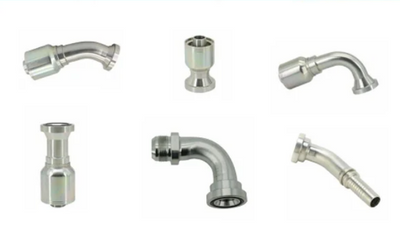
Hydraulic flanges are valuable where a threaded connection would be difficult to install, heavily loaded or impractical at a larger conductor. They provide a removable joint at pumps, motors, valves, manifolds, hose ends and tube or pipe assemblies.
Selection should start with the existing port and installed load, not a universal pressure or tube-size threshold.
Identify the connection family at the component
Compact four-bolt hydraulic connections commonly follow SAE J518 or ISO 6162 series, while imported equipment can use JIS or OEM patterns. Record port diameter, bolt spacing, flange head, groove, O-ring, clamps and fasteners.
Keep these separate from ASME process-piping flanges, which use different facing, gasket, bolt-circle and rating systems. Both are flanges, but they do not form the same joint.
Select series and size from current ratings
Code 61 is generally the standard-pressure family and Code 62 the higher-pressure family. Working capability varies with size and product; neither label equals one pressure across its full range.
Use the exact standard or manufacturer table and include credible transients, temperature and duty. The assembly is limited by the port, connector, clamps, fasteners, seal and attached conductor.
Use geometry to reduce installation load
Straight flange heads, elbows, hose ends and tube connections place the conductor differently. Choose a body that reaches the route without an unnecessary stack of adapters.
Bolts must not pull a rigid tube into alignment or force a hose below its bend radius. Support weight and vibration outside the port, while retaining enough flexibility for intended machine motion.
Plan the service sequence
Split clamps can allow removal where axial clearance is limited. Confirm wrench access, screw removal space and whether the conductor can be safely supported when the joint opens.
Place the flange where technicians can clean and inspect the port face and groove. A serviceable connection hidden behind permanent structure may save space initially and create contamination or alignment problems later.
Specify sealing and fasteners together
Choose the O-ring compound for fluid and temperature and verify groove dimensions. External corrosion can affect clamps and screws even when the internal seal remains compatible.
Use the required screw thread, length, grade or property class and tightening method. Metric and inch fasteners are not interchangeable because they fit through similar clearance holes.
Verify the completed pressure boundary
Inspect faces and seal, align the conductor, install clamps correctly and tighten evenly under the governing procedure. Restore pressure safely and inspect for leakage from outside the spray path.
For replacement records, keep standard, series, size, geometry, seal, fasteners, conductor and orientation together. The right flange is the one that matches the port and survives its real load while remaining accessible for the next service event.