
Selecting Stainless Pipe, Fittings, and Adapters as One Corrosion System
Dec 13th 2022
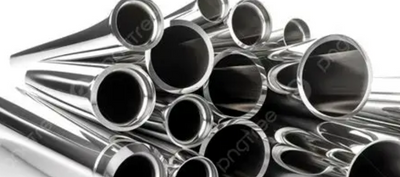
Stainless pipe does not become a corrosion-resistant system until its fittings, adapters, seals, welds, and external environment are considered with it. A 316 pipe connected through an unsuitable adapter or contaminated during fabrication can fail at the joint even when the straight pipe remains sound.
Selection therefore begins with the fluid and exposure, then carries one material and connection strategy through the complete route.
Define the corrosion environment before choosing a grade
Record the media composition, concentration, temperature, flow condition, cleaning chemicals, and possible contamination. Outside the pipe, consider chlorides, salt spray, washdown, insulation, crevices, and contact with other metals.
304 stainless is common in general industrial and sanitary fabrication. 316 contains molybdenum that generally improves resistance to chloride pitting, but it is not immune to seawater or every chloride concentration. More demanding chemical or temperature service may require another alloy entirely.
Painting or coating stainless can protect an exterior in some designs, but it does not convert an unsuitable base grade into the correct material for internal process exposure.
Size pipe by standardized dimensions and required flow
Nominal Pipe Size identifies a standardized pipe series. Schedule establishes wall thickness for the nominal size; the resulting inside diameter affects flow and pressure loss. Outside diameter, wall, material, allowable stress, temperature, corrosion allowance, and code rules all contribute to the pressure design.
Do not calculate schedule simply by subtracting one field measurement from another. Use the applicable dimensional standard and verified product specification. The line-sizing calculation should consider required flow, velocity, pressure drop, pump or process conditions, and future fouling where relevant.
Seamless and welded are manufacturing routes, not quality rankings
Seamless pipe is formed without a longitudinal weld. Welded pipe is produced from strip or plate and joined along a seam using a qualified process. Both can be supplied to demanding standards with defined material properties, dimensions, heat treatment, and examination.
Seamless product may be selected for certain pressure, temperature, or procurement requirements. Welded product can offer broad size availability and cost advantages. It is inaccurate to assume that seamless is always more corrosion resistant or stronger; grade, specification, wall, weld quality, heat treatment, and service determine performance.
Complete each connection description
Fittings change direction, branch flow, close ends, or join pipe by threaded, welded, flanged, or other methods. Adapters transition between connection families such as JIC, ORFS, ORB, NPT, BSP, or metric standards. In practice the terms can overlap, so a purchase description should name both ends rather than rely on “fitting” versus “adapter.”
Identify thread form, pitch, seat or seal, nominal size, schedule or tube dimension, material, and body shape. A male JIC end requires a compatible 37-degree female seat; matching thread diameter without the correct seat is not sufficient.
Dissimilar materials are not automatically prohibited, but hardness, thermal expansion, galvanic behavior, galling, and corrosion have to be reviewed. Use compatible seals and an installation procedure appropriate to stainless threads and surfaces.
Protect material identity through fabrication and inventory
Keep alloy and heat traceability where the application requires it. Separate stainless from carbon-steel grinding debris and tooling contamination. Control weld filler, cleaning, passivation, and surface finish under the fabrication specification.
For replacement inventory, record the drawing revision and both connection ends. Common sizes can be stocked locally without losing identity; unusual adapters should remain linked to the equipment or line record so a similar-looking 304 or carbon-steel part is not substituted during urgent maintenance.
The right stainless system is a coordinated choice of alloy, wall, manufacturing specification, connection geometry, seals, and fabrication controls. Selecting those elements together is more reliable than beginning and ending with the word “stainless.”