
Separate BSPP, BSPT, and NPT Before Choosing a British Adapter
HGW Hydraulics on Jun 2nd 2021
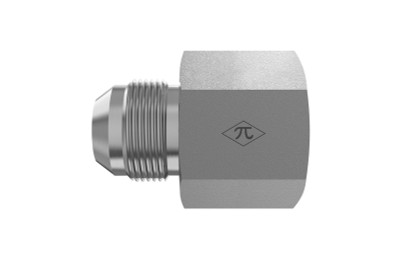
British pipe threads are frequently confused with NPT because nominal sizes do not equal measured outside diameter and several sizes appear close. The parts may begin to engage, but different thread angle, pitch, taper, and sealing geometry can damage the connection.
Choosing the correct British adapter requires two identifications: the thread form and the place where fluid seals.
BSPP is parallel but can use several seals
BSPP uses a 55-degree Whitworth parallel thread form. Because the thread diameter does not taper, the threads generally retain the connection while another feature seals.
Common BSPP arrangements include a male 60-degree cone mating with a female swivel cone, a port connection sealed by a bonded washer, or an O-ring and machined spotface in a defined design. Other equipment can use different seats.
A 30-degree chamfer measured from the fitting axis is sometimes described as a 60-degree included cone. Angle terminology must be confirmed before comparing charts. Inspect the actual male and female seat rather than assuming every BSPP end has the same cone.
BSPT seals through tapered engagement
BSPT uses a 55-degree tapered Whitworth thread. Male and female diameters change along the thread, and the joint uses controlled interference with the sealant practice specified for the application.
Some standards allow a tapered male to mate with a compatible parallel female pipe thread in a defined joint, but that does not mean any BSPT male can be installed in any BSPP swivel or port. The female thread form, seat, component design, pressure, and manufacturer instruction must support the combination.
Do not use the flat or chamfered end face as the primary way to distinguish BSPT from NPT. The decisive evidence is thread form, pitch, taper, and specification.
NPT is a different pipe-thread family
NPT uses a 60-degree thread form with different pitches and diameters from BSP. It is common in North America; it is not a type of BSPT. A near-match can damage both parts and leave incomplete engagement.
Measure and gauge before applying sealant. Thread tape or paste cannot correct a 55-degree/60-degree mismatch.
Record raw measurements
Clean the threads and inspect for damage. Determine whether diameter changes along the length. Use calipers at the positions defined by the identification method and a pitch gauge over intact threads. Record male major diameter or the specified female measurement without adding male and female values together.
Compare the raw diameter, threads per inch, taper, and form with a current BSPP/BSPT chart. Nominal 1/4, 3/8, or 1/2 pipe size will not equal caliper diameter.
Then identify the seal: cone, bonded washer, O-ring, tapered engagement, or another seat. Confirm male/female orientation, swivel or fixed body, and the connection at the other end.
Choose the complete adapter, not only the British end
A British adapter may convert to JIC, ORFS, ORB, NPT, metric, hose, tube, or another BSP connection. Identify both ends independently and confirm bore, material, finish, seal, body shape, pressure-temperature rating, and fluid compatibility.
Elbows and tees need the correct installed orientation without using the hose or tube to force alignment. Port-style seals require an undamaged spotface; swivel cones require matching angles and clean surfaces.
For an unknown imported machine, use the equipment drawing, OEM data, or a verified sample. Store BSP and NPT adapters separately and label the seal style so a similar thread is not selected during an urgent repair.
British threaded adapter selection becomes straightforward when BSPP, BSPT, and NPT are treated as distinct geometries. Thread measurements establish the family, and the seat or seal establishes how the joint should be assembled.