
Turn Early Hydraulic Defects into Scheduled Corrective Work
HGW Hydraulics on Dec 5th 2024
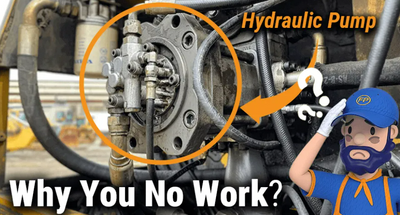
Corrective maintenance should begin when evidence shows a component is degrading, not only after the machine stops. A seep, temperature trend, damaged hose cover or recurring filter alarm can become planned work if the observation is recorded with enough detail to make a decision.
The objective is to restore the function and remove the condition that shortened component life. Merely exchanging the visible part leaves the next failure on the same path.
Convert an observation into a work order
Record the machine, circuit location, operating state and exact symptom. Add photographs, pressure or temperature readings, fluid-analysis data and the date the condition was first observed. Define whether the machine can continue under a documented limit or needs immediate isolation.
Give the work order a measurable acceptance condition. “Fix leak” is vague. “Identify the sealing interface, replace damaged components under the approved procedure, clean the area and verify no leakage during the specified functional test” can be checked.
Plan the repair around hazardous energy
A stopped pump does not prove that hydraulic energy is gone. Accumulators, elevated loads, compressed elastomers, pressurized reservoirs and trapped line sections can remain hazardous. Follow the machine-specific energy-control procedure, block or lower supported loads, isolate sources, release stored pressure and verify the condition before loosening a connection.
Fluid injection and unexpected movement are serious hazards. Keep hands away from suspected pinhole leaks and use the approved detection method. Required locks, tags, valves, restraints and personal protective equipment come from the employer and equipment procedures.
Preserve evidence before discarding the part
Mark orientation and location before disassembly when that information can explain side load or routing. Protect the circuit from contamination and retain the failed seal, hose end, ferrule or fitting until the inspection is complete.
Look for scoring, fretting, corrosion, heat, extrusion, incorrect engagement, incompatible parts and evidence of external load. Compare the removed item with the drawing and parts record. If it failed earlier than the planned interval, enter that fact in the maintenance history.
Correct the driver, not just the symptom
A connection leak may begin with tube misalignment, hose tension, vibration, a damaged port, wrong elastomer, contamination or an installation error. A hot valve can be caused by restriction or a control issue elsewhere. The replacement plan should address the demonstrated mechanism.
Changes to routing, supports, materials, settings or maintenance frequency need engineering and change-control review where applicable. Avoid improvising a different fitting simply because its thread appears to start.
Close the job with controlled return to service
Restore guards, caps and supports; account for tools and clean the work area. Refill, bleed or flush only under the approved procedure. Test progressively from a safe position and inspect the repair at the defined pressure, temperature and operating modes.
Record the installed traceable part, technician, measurements and verification result. Feed confirmed causes back into inspection points, spare-parts planning and future shutdown work. Corrective maintenance becomes proactive when every early defect improves the next maintenance decision.