
Build DIN Cap and Plug Kits Around Tube Series, Not Case Size
HGW Hydraulics on Mar 17th 2022
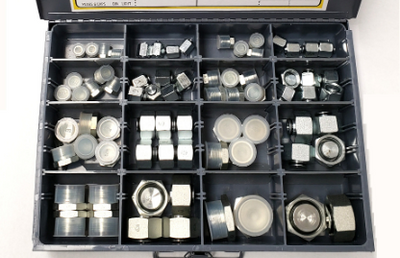
A larger plastic case does not make a DIN cap-and-plug kit more useful. The kit succeeds when every cap and plug is matched to the installed light or heavy tube series and protects an open connection without damaging its seat.
Series and tube OD control identity
DIN/ISO 24-degree tube fittings pair tube outside diameter with metric thread and series. Light-series examples can use M12 × 1.5 through larger M52 × 2 combinations; heavy-series parts use different tube/thread pairings, even where a thread appears in both series.
Do not choose by thread alone. Record tube OD, L or S series, male/female end, 24-degree geometry, and the exact cap or plug design.
A cap and a plug protect different ends
A cap closes a male fitting or tube end; a plug closes a female body or port according to the product system. Confirm whether sealing is metal, elastomeric, or another defined arrangement. Shipping protectors are not automatically pressure-rated service closures.
Use the component instruction for pressure, temperature, fluid, material, and assembly. Never pressurize a temporary dust cap.
Stock from installed demand
Analyze machines and service history before choosing standard or expanded coverage. Common 6L, 8L, 10L, 12L, and other sizes may justify deeper local stock, while rare 35L, 42L, 30S, or 38S items can be controlled according to replenishment time.
Separate light and heavy parts physically and label metric thread plus tube series. Include gauges and a current chart so technicians do not test-fit uncertain pieces.
Clean storage is part of the kit
Keep closures capped, bagged, and free of metal chips, dirt, and damaged threads. Quarantine used pieces until inspected and cleaned under the applicable procedure. Record part numbers and lot/revision where traceability matters.
The useful DIN kit is a controlled connection-protection system. Series, tube size, seal, rating, and cleanliness matter more than marketing claims about a stronger carrying case.
Use closures during maintenance without creating trapped pressure
Caps and plugs can keep contamination out of disconnected lines and preserve organized work, but a service-rated closure can also trap hydraulic energy or thermal expansion. Identify whether the line is drained, vented, isolated, or expected to hold pressure and apply the machine’s energy-control procedure.
Do not use a cap as a substitute for blocking or mechanically supporting a load. Label temporarily closed lines and account for every closure before restart.
Inspect returned pieces before restocking
Threads, 24-degree cones, O-rings, and wrench surfaces can be damaged during field use. Separate used from new stock. Inspect and clean reusable parts to the manufacturer’s criteria; discard or quarantine uncertain pieces rather than returning them to the kit.
Track consumption by series and size. If M18 × 1.5 pieces disappear rapidly, confirm whether they are 12L, 10S, or another configuration before increasing inventory. Thread notation alone can hide the actual demand.
Preserve approved kit content
Maintain a contents list with internal part numbers, quantities, material, seal, and revision. When replenishing from overseas production or another supplier, compare first articles with controlled drawings and samples. Similar caps may have different depth or sealing geometry.