
Do Not Confuse ASME Pipe Flanges with Hydraulic Four-Bolt Flanges
HGW Hydraulics on Dec 8th 2021
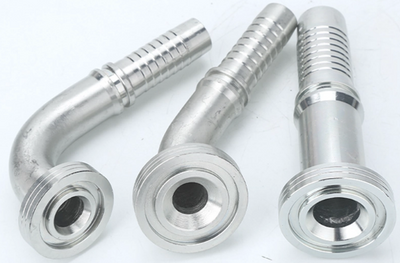
“DIN flange versus ANSI flange” sounds like a simple metric-versus-inch choice, but it can mix unrelated products. DIN and ANSI are standards organizations or historical labels, not complete connection descriptions. A plant pipe flange and a compact hydraulic four-bolt flange do not become alternatives merely because both use bolts.
The first task is to identify the governing standard and system function.
Separate process-piping flanges from hydraulic clamp flanges
ASME B16.5 covers pipe flanges and flanged fittings through defined nominal pipe sizes and rating classes, with requirements for materials, dimensions, tolerances, marking and pressure-temperature ratings. These are full pipe-flange joints with bolt circles and facing arrangements selected for a piping system.
ISO 6162 and SAE J518-family connections address compact hydraulic flange heads, ports, O-ring grooves and split or one-piece clamps. They connect tube, pipe or hose ends to hydraulic ports and are often described in Code 61 or Code 62 language.
Neither product can be identified from the word “flange” alone. If a replacement has two clamp halves around a small head and an O-ring at the port, it is not an ASME B16.5 pipe flange.
Require the exact DIN or EN designation
DIN numbers historically appear across German and European piping and hydraulic components. Many specifications have been replaced, aligned or published as EN or ISO standards. “European DIN flange” is therefore incomplete without the standard number, revision, nominal size, pressure designation and facing.
Metric dimensions do not prove DIN identity. ASME documents can provide metric values, and hydraulic flange standards can permit metric or inch fasteners while retaining the same defined connection family.
Use the equipment drawing, component marking and dimensional table to determine what standard actually governs.
Compare the dimensions that create the joint
For a process-piping flange, record nominal pipe size, rating class or pressure designation, outside diameter, thickness, bore, bolt-circle diameter, number and size of holes, facing, gasket and material.
For a hydraulic four-bolt connection, capture port diameter, bolt spacing in both directions, flange-head diameter and thickness, O-ring groove, clamp style, fasteners and series. Code 61 and Code 62 patterns should not be inferred from pressure alone.
A set of bolt holes that can be forced into alignment is not dimensional compatibility. Mislocated clamps or bolts can load the head unevenly and prevent correct O-ring compression.
Read pressure from the standard and material
ASME pipe-flange classes are not direct pressure values. Allowable pressure changes with material and temperature under the applicable standard. European PN designations also require their governing standard and material context.
Hydraulic flange capability depends on series, size, material, screws, port and the completed connector. Pressure transients can further affect retention. Do not copy a catalog maximum from another size or call every four-bolt flange a fixed pressure rating.
Design assembly and maintenance access
Pipe-flange assembly considers gasket selection, facing condition, bolt procedure, alignment and piping loads. Hydraulic clamp-flange assembly centers on a clean O-ring, undamaged groove and port face, correct clamp orientation, specified screws and an approved tightening sequence.
Both need alignment without pulling the conductors into place with the bolts. Both also need enough access for inspection and controlled disassembly.
Imported equipment and U.S. facilities often contain multiple standards. A machine's location or manufacturer's home country cannot replace measurement, especially after adapters and repairs have been added.
Write a replacement description that survives handoff
Record the standard number and revision, flange type, size, rating designation, material, seal or gasket, mating face, bolt details and attached conductor. Add photographs and equipment location when markings are incomplete.
The useful difference is not “DIN is metric and ANSI is American.” It is the exact geometry, sealing method and rating system that the two mating components were designed to share.