
When NPT Belongs in a Hydraulic Circuit—and When It Does Not
HGW Hydraulics on Sep 15th 2021
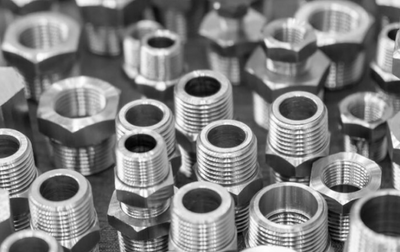
Hydraulic systems do use NPT connections, but “hydraulic fitting” does not mean NPT and NPT is not the default for every U.S. machine. JIC, ORFS, ORB, flange, BSP, metric, and other connections may appear in the same circuit.
The decision to retain or convert an NPT port should consider how tapered thread engagement seals, how the port carries stress, and whether future service can reproduce the joint.
Identify NPT from the thread, not the country
NPT uses a 60-degree thread form and a defined taper. Size is nominal pipe size, so measured outside diameter is larger than the nominal name. Threads per inch vary by size.
Measure male diameter at the specified position, check taper over a known length, and match pitch with a gauge. Confirm the female port using an appropriate gauge or drawing.
BSPT uses a 55-degree Whitworth form and different dimensions. A BSPT near-match can enter an NPT port but is not interchangeable. NPSM and other straight pipe threads also require a different sealing interface.
Tapered engagement creates both seal and port load
As the NPT male advances into the female taper, thread interference increases. Approved sealant fills the remaining helical leakage path and supports the specified fluid, temperature, contamination, and disassembly needs.
Over-tightening can crack a female boss or distort threads, especially in thin, brittle, or soft components. Under-engagement or wrong sealant can leak. There is no safe rule to tighten until a body points in the desired direction.
Follow turns/torque/engagement guidance for the exact component and hold the mating body with a backup wrench.
JIC is not another tapered end
JIC uses straight threads and a 37-degree metal flare. ORB uses straight threads and an O-ring in a port chamfer. ORFS uses an O-ring at a flat face. Their threads provide clamp or retention while a separate seat seals.
These architectures can reduce taper stress and make orientation or repeated service easier in selected applications. They are not automatically higher-pressure or superior; exact size, material, rating, temperature, vibration, and assembly control matter.
Inspect before reusing NPT
Prior assembly deforms and burnishes tapered threads. Old sealant can hide cracks, pulled threads, corrosion, or cross-threading. Clean by the approved method and inspect thread form, engagement, port condition, and component instructions.
Do not apply a universal “two or three reuses” rule. Some parts may permit inspection and remake; others should be replaced after disturbance. Never chase an unknown pressure port casually with a tap.
Distinguish NPT from NPTF and straight pipe swivels
NPTF dryseal threads use controlled crest and root interference intended to reduce the spiral leakage path within their standard. NPT and NPTF relationships depend on class, component, sealant practice, and manufacturer instructions; the labels should not be collapsed into one generic pipe end.
NPSM is a straight pipe thread commonly found in swivel arrangements where a seat, not thread taper, seals. Applying tapered-thread rules or sealant to that swivel seat can create a leak.
Record the complete designation from drawings or gauges. A parts bin labeled only “pipe” is not adequate for pressure service.
Keep sealant out of the hydraulic system
Apply paste or tape exactly as specified and away from the first thread where the procedure requires it. Excess material can enter the circuit, block small orifices, interfere with valves, or contaminate sampling.
Sealant compatibility includes hydraulic fluid, temperature, pressure, cure, metal, disassembly, and cleanliness. Oxygen, gas, water, or other services can require different products even when the thread is NPT.
Convert only with a controlled reason
An NPT-to-JIC, ORB, ORFS, BSP, or metric adapter creates two seals and adds length. Confirm both ends, minimum bore, pressure rating, material, seal, and wrench clearance. Support the added weight so it does not lever the port.
For a recurring machine redesign, a dedicated straight-thread port may be preferable to a permanent adapter chain, but the manifold, valve, and drawings must be engineered and updated.
Keep NPT where its verified system fits
NPT can remain practical in many valves, gauges, utility lines, manifolds, and industrial or mobile circuits when the port, fitting, sealant, pressure-temperature envelope, and maintenance procedure are designed for it.
Record actual NPT size and pitch, fitting material, sealant, engagement method, orientation, rating, and approved replacement. The useful answer is not that all hydraulics should or should not use NPT; it is whether this tapered joint can be assembled, supported, and inspected reliably in this circuit.