
Choose a High-Performance Alloy from the Specific Corrosion or Heat Mechanism
HGW Hydraulics on Apr 21st 2021
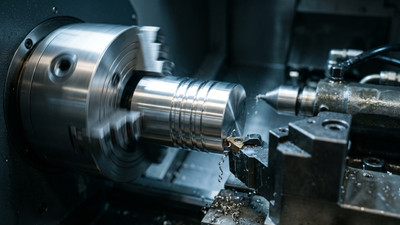
“Superalloy” and “specialty alloy” cover materials designed for different combinations of corrosion, oxidation, strength and temperature. A high purchase price or nickel content does not make one family the best choice for every harsh environment.
Selection starts with the failure mechanism, then identifies an exact grade, product form and fabricated condition.
Start with the environment rather than a family name
Separate uniform corrosion from pitting, crevice attack, stress-corrosion cracking, oxidation, erosion-corrosion and loss of strength at temperature. A material that performs well in one mechanism can still fail by another. For a fluid component, also evaluate internal media and the external environment because the wetted bore, tube end and exposed body may face different conditions.
Laboratory corrosion tables are screening tools, not finished-component ratings. They may describe an annealed coupon in a controlled solution rather than a cold-worked fitting with crevices, residual stress, weld heat tint or galvanic contact. Confirm the concentration range, temperature, velocity and aeration behind any published value.
Nickel-copper Alloy 400 for selected reducing and marine media
Alloy 400 is primarily nickel and copper with controlled minor elements. It is used in some seawater, marine, caustic, hydrocarbon and chemical-processing equipment, including tubing, fittings, valves, pumps and heat exchangers.
Its performance varies with aeration, velocity, contaminants, temperature and galvanic contact. It is not immune to every seawater or acid condition. Welding procedure and final component rating remain separate from base-alloy corrosion data.
6Mo super-austenitic stainless for severe chloride screening
Grades such as UNS S31254 contain elevated chromium, nickel, molybdenum and nitrogen compared with conventional 300-series stainless. They can improve resistance to chloride pitting and crevice attack while offering higher strength.
Applications include seawater handling, bleach plants, flue-gas cleanup, offshore equipment and process vessels. Temperature, crevice geometry and chloride concentration still require review. Higher strength can also change wall or forming calculations; it should not be used to copy dimensions from 316 without engineering.
Alloy 825 for mixed acid and reducing/oxidizing conditions
UNS N08825 is a nickel-iron-chromium alloy with molybdenum, copper and titanium additions. It appears in acid production, chemical processing, pollution-control and oil-and-gas equipment where its particular corrosion balance is useful.
“Both oxidizing and reducing” is only a broad description. Sulfuric or phosphoric acid concentration, temperature and impurities can shift suitability. Use current corrosion data and weld-condition guidance for the exact stream.
Nickel-chromium families for high-temperature strength and oxidation
Nickel-chromium-based alloy families include grades developed for turbines, engines, heat-treatment equipment and other elevated-temperature components. Chromium supports oxidation resistance while nickel-based matrices can retain useful strength at heat.
Each grade has different additions, precipitation response, weldability and corrosion behavior. A jet-engine application does not authorize the same generic alloy for a hydraulic fitting exposed to saltwater.
Nickel-chromium-molybdenum families for aggressive chemical service
These alloy families are used in reactors, heat exchangers, piping and valves exposed to specific acids or mixed chemical conditions. Molybdenum and chromium levels vary substantially among grades, which changes resistance to reducing acids, oxidizing contaminants and localized corrosion.
Avoid ordering by a trade-family name alone. Require the UNS or equivalent designation and applicable material specification.
Treat fabrication as part of material performance
Forming, machining and joining can change the condition that produced the published property data. A grade that is suitable as plate does not automatically qualify a small forged or machined pressure component. Confirm the permitted product form, heat treatment and mechanical-property requirements in the governing material specification.
Welded assemblies require procedure and filler-metal review. Remove surface contamination using a method appropriate to the alloy, and prevent carbon-steel tools or storage racks from transferring free iron to corrosion-resistant surfaces. Inspection should cover both dimensions and the material identity needed by the drawing.
Seals remain a separate selection. An alloy body may survive an acid or hot stream while an elastomer swells, hardens or loses compression. Gaskets, O-rings, packing and lubricants must be reviewed against the same media and temperature profile.
Compare lifecycle risk, not metal price alone
A specialty alloy can be economical when it prevents repeated shutdowns or hazardous leakage, but unnecessary alloy upgrades can make replacements slow and expensive. Compare a correctly selected conventional grade, corrosion allowance, coating or lining, design changes that remove stagnant crevices, and the appropriate high-performance alloy.
For U.S. maintenance stock, classify sizes by actual failure consequence and demand. Common service parts may justify local inventory, while rare configurations can be controlled through drawings, approved material specifications and a replenishment plan. Do not substitute a more available family merely because its trade description sounds similar.
Complete the fitting specification after alloy selection
Record media composition, concentration, temperature, pressure, flow, aeration, deposits, cleaning and external atmosphere. Then define thread or flange standard, seal, tube size, product form, heat treatment, weld procedure, surface condition and documentation.
Availability and traceability matter because special grades can have longer replenishment paths. Approve material and critical dimensions before volume production, preserve lot identity and stock only the sizes justified for U.S. service demand.
High-performance alloys earn their place when evidence shows which ordinary material mechanism they prevent. They should not be treated as five rungs on a universal corrosion ladder.