
Choose Flared or Flareless Tube Ends from Tube Preparation and Duty
Jul 21st 2022
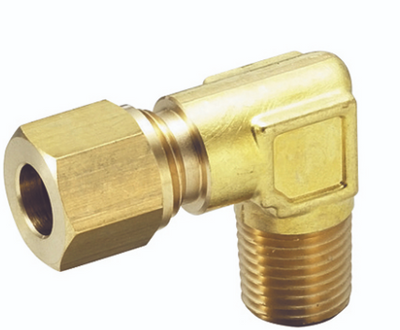
Flared and flareless connections solve the same basic problem by different load paths. A flared joint forms the tube into a mating seat. A flareless joint grips an unflared tube with a ring, sleeve or ferrule while sealing at defined contacts.
Neither method is universally faster, stronger or better under vibration. The complete standard and tube preparation determine performance.
Understand what the flare changes
In a 37-degree hydraulic connection, the tube end is formed outward and clamped against a matching cone. The nut supplies axial load, while the flare and seat contain pressure.
Tube material, outside diameter, wall thickness and temper must permit the specified flare without cracking, thinning or becoming eccentric. Cut the tube square, deburr it correctly and inspect the finished cone before assembly.
A 45-degree or 30-degree flare is not interchangeable with a 37-degree seat even if the retaining threads appear close.
Identify the flareless mechanism
Single-ring bite fittings, dual-ferrule instrumentation fittings and other compression systems do not all seal identically. Some use a cutting ring against a 24-degree cone; others use front and back ferrules or a separate sleeve.
Tube OD, wall, hardness, surface condition and insertion depth must meet that product system. Tightening should follow the defined initial make-up and remake method, not a generic compression instruction.
ORB describes an O-ring boss port, not one generic flareless tube termination. A body can convert a flareless tube end to ORB, but the two interfaces remain distinct.
Compare fabrication and service conditions
Flaring needs access and tooling to create and inspect the tube end. It can be practical in a shop or on a line designed for field flaring. A ferrule system can avoid forming the cone but still needs square tube, proper deburring, insertion and controlled pull-up.
For tight installations, decide whether tools can reach the joint and whether rigid tube can be aligned without side load. A connection that is easy to make on a bench may be difficult behind a manifold.
Use product ratings instead of category labels
Pressure and temperature capability depend on size, tube, material, standard and completed fitting. A flared system is not automatically high-pressure, and a flareless system is not automatically low-pressure or leak-free.
Review vibration, thermal cycling, corrosion, disassembly frequency and acceptable leakage. Supports and routing protect both styles from bending at the joint.
Preserve the tube-end specification
Record connection standard, tube OD and wall, material/temper, seat or ferrule design, thread, body material and assembly method. If the line is remade, replace rings, sleeves or tube sections as the fitting instructions require.
The best choice is the connection whose tube can be prepared, inspected and serviced consistently in the actual machine environment.