
Recheck Hydraulic Fluid Compatibility Whenever Formulation or Temperature Changes
HGW Hydraulics on Feb 1st 2024
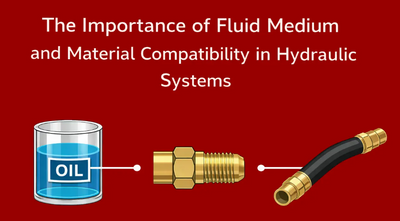
Material compatibility is not established by a broad fluid label such as hydraulic oil, water-glycol, solvent, or synthetic. Additives, concentration, contamination, temperature, pressure, exposure time, and cleaning chemicals can change how a hose, seal, coating, or fitting behaves. The compatibility record should name the actual formulation used in the machine.
Map every wetted and externally exposed material
List hose inner tube, cover, reinforcement exposure, O-rings, backup rings, rod and piston seals, gaskets, plastics, adhesives, fitting alloy, plating, tube, reservoir, paint, and filter media. Separate internal contact from splash, washdown, vapor, and outdoor exposure.
A hose tube may suit petroleum oil while its cover deteriorates from an external chemical. A stainless fitting may tolerate the media while its O-ring swells. The assembly is controlled by the least compatible necessary material.
Use exact-fluid evidence instead of a simplified table
Nitrile often performs well with many petroleum-based hydraulic oils. EPDM is commonly considered for water and glycol service but is generally unsuitable for petroleum oil. FKM, polyurethane, neoprene, and other elastomers have their own strengths and limitations. None of those summaries approves an unknown compound for every formulation in a category.
Obtain fluid and component manufacturer compatibility data, including concentration and temperature. Letter grades such as excellent or poor are screening information and may come from immersion tests that do not represent pressure cycling, decompression, dynamic sealing, or long-term aging.
Where consequences are high or data are incomplete, responsible engineering can require controlled testing using the real fluid and service conditions. Record the compound designation rather than only “rubber” or a trade name.
Treat temperature as part of chemical exposure
Higher temperature can accelerate chemical reaction, oxidation, permeation, and elastomer aging. Cold can increase hardness or reduce flexibility. Pressure and rapid decompression can add mechanical damage that a static compatibility chart does not address.
Use continuous and transient fluid temperature plus ambient conditions. Check seals, hose, fittings, and any lubricant across the same range. A fitting body’s metal temperature capability does not authorize an O-ring beyond its qualified range.
Control changes after the original purchase
Maintenance can introduce a new oil brand, additive package, flushing solvent, cleaner, top-off mixture, or replacement seal compound. A new formulation marketed for the same general application may not have identical compatibility.
Use change control for fluids and critical replacement materials. Document what is drained, whether flushing is required, how residual fluid is handled, and which seals or hoses need review. Avoid mixing fluids without written compatibility and performance approval.
Diagnose material response before blaming the fitting
Swelling, shrinkage, hardening, softening, cracks, blistering, delamination, discoloration, sticky surfaces, corrosion, and seal extrusion are different evidence. Preserve the affected component and service history. Measure and compare with an unused sample when a formal analysis is warranted.
Extrusion or nibbling can result from clearance, pressure, backup-ring design, temperature-softened elastomer, or assembly damage; changing to a harder seal without examining the geometry may create another problem.
Put compatibility into the replacement order
Specify fluid manufacturer and grade, concentration, possible contaminants and cleaners, pressure, temperature, internal and external exposure, hose and seal compound, fitting alloy or coating, and required evidence. Label special-fluid machines and keep approved spares separate.
Compatibility review is therefore a lifecycle control, not a one-time sales decision. Rechecking when formulation, temperature, or replacement material changes helps prevent leaks and contamination while avoiding unsupported promises about service life or universal chemical resistance.