
Decide Between Forged and Brazed Fittings from Geometry and Qualification
HGW Hydraulics on Mar 31st 2021
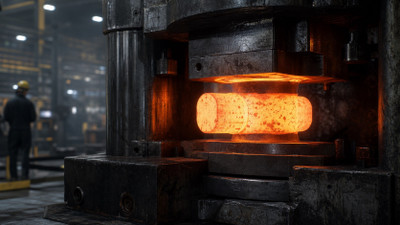
Forging and brazing are different ways to create a fitting body. Forging reshapes a solid workpiece, while brazing joins prepared components with a filler metal. Neither process name alone establishes pressure rating, fatigue life, leak performance, or cost.
The right choice depends on geometry, alloy, joint loads, production volume, process control, and verification of the finished component.
Forging places solid material around a shape
Hot or cold forging forces billet or other stock into a die. Proper reduction and die design can produce favorable grain flow, refined structure, near-net external geometry, and efficient material use. Threads, bores, seats, and sealing faces are typically machined afterward.
One-piece construction can remove a brazed joint and support compact elbows, tees, and wrench flats. It can also introduce laps, underfill, die mismatch, scale, or heat-treatment issues if the process is poorly controlled.
Forging temperature is selected from alloy and process requirements, not a universal percentage of melting point. Grain refinement, phase transformation, and heat treatment vary among carbon steels, stainless steels, brass, and other materials.
Brazing creates geometry from prepared pieces
Brazing heats an assembly above the filler metal’s liquidus but below the base materials’ solidus. Capillary action draws filler through a controlled joint clearance. Furnace brazing can process many parts in a managed atmosphere and heat cycle; torch, induction, vacuum, and other methods serve different needs.
Brazing can combine standard machined sections into offsets, branches, or connection combinations that would require costly forging tooling. Joint overlap and fit, cleanliness, filler alloy, atmosphere or flux, heating uniformity, base-metal condition, and post-braze cleaning control performance.
A brazed joint is not automatically a fatigue weak point. Its stress and service capability depend on design and qualification. Conversely, an attractive fillet does not prove complete filler flow through the joint.
Compare finished-part risks
For a forging, verify material, grain flow where critical, heat treatment, dimensions, surface discontinuities, machining, coating, and pressure tests. For a brazed part, verify component materials, joint clearance, filler, heat cycle, joint coverage, cleanliness, distortion, corrosion interaction, and inspection method.
Both processes can be compromised after forming by a wrong thread, damaged seat, thin wall, contamination, or unsuitable coating. The lowest-rated connection or seal controls the assembly.
Volume and revision stability affect cost
Forging dies can be economical for stable repeat production but require tooling investment and lead time. Brazed construction may support lower volumes or more connection combinations from common subcomponents, though fixturing, joint preparation, inspection, and furnace capacity add cost.
Near-net shape does not guarantee less total waste, and neither process eliminates skilled engineering and operation. Compare tooling, raw material, machining, heat treatment, labor, scrap, testing, traceability, and expected revisions.
Specify the evidence the application needs
Define drawing revision, material and condition, manufacturing route if essential, dimensions, joint requirements, heat treatment, coating, cleanliness, pressure-temperature rating, testing, marking, and nonconformance control.
Approve a first article before production and retain lot traceability. If the supplier changes billet source, filler alloy, furnace cycle, die, joint geometry, or machining route, use the controlled change process.
Forged and brazed fittings can both be reliable when their geometry and process suit the load and the finished part is verified. The defensible decision replaces absolute claims about “stronger” manufacturing with documented material, joint, inspection, and rating evidence.