
Distinguish 24-Degree Tube, Standpipe, and Banjo Connection Forms
HGW Hydraulics on Jun 15th 2022
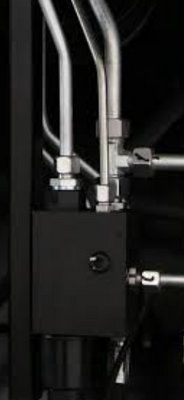
European mobile and industrial equipment can place several metric connection forms within one circuit. A 24-degree cone, a tube-series designation, a standpipe and a banjo do not describe four interchangeable fittings; each tells a different part of the connection story.
Identification begins at the sealing surface and load path.
Recognize the 24-degree cone interface
ISO 8434-1 covers defined 24-degree cone connectors using cutting rings and O-ring seal cones within its scope. Straight metric threads clamp the mating parts while the cone, ring or elastomeric nose creates the pressure boundary.
A female half may be a prepared tube with nut and cutting ring or a hose/tube end with a compatible O-ring cone. Inspect the face instead of assuming every female metric swivel has the same internal geometry.
Seat angle should be verified with the correct gauge method and reference. A 12-degree half-angle reading can represent a 24-degree included cone; document which convention the tool uses.
Treat LL, L and S as series, not pressure promises
DIN 2353 catalog language commonly uses extra-light, light and heavy series identifiers. Tube OD, metric thread and component dimensions distinguish them.
Do not select a series from a general “low, medium or high pressure” label. Use the current rating for the exact size, material, tube and standard. A nut from one series may start on another part without producing the intended tube grip.
Understand what a standpipe assembly does
An adjustable standpipe end can combine a tube-like stem, nut and sleeve or ring to meet a 24-degree body. It provides a compact transition and may allow final orientation depending on design.
Confirm whether components are supplied preassembled, how the sleeve is set and whether remake is permitted. Do not disassemble or mix the small parts unless the product procedure allows it.
Follow the banjo flow path
A banjo uses a drilled bolt and ring-shaped body to turn fluid through a compact envelope. Sealing washers or defined faces contain pressure at the bolt joint, while the connected line can be oriented before final tightening.
This geometry is useful around brakes, fuel dosing, filters, clutch or steering circuits and other mobile equipment, but application does not establish rating. The source port, bolt drilling, seals, body thickness, media and temperature must match.
Banjo pressure capability varies widely; one extreme catalog value should never be applied to the entire connection type.
Keep system families under revision control
ISO, DIN legacy, BSPP and proprietary metric products can share threads while changing cones, rings or seals. Document the full part system and use verified compatibility rather than a broad leading-brand interchangeability claim.
For replacement, record port end, tube or hose end, series, thread, seal, material, body orientation and assembly method. The metric thread retains the parts; the detailed form explains how the joint actually works.