
How Zinc Coating Protects Steel Pipe—and How Galvanized Systems Age
HGW Hydraulics on Nov 24th 2022
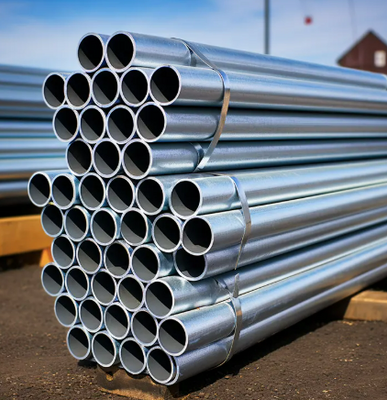
Galvanized pipe is steel protected by a zinc coating. The coating delays attack on the steel through a combination of barrier protection and sacrificial corrosion. That protection is useful, but it is finite. Coating thickness and continuity, water or process chemistry, wet-dry exposure, temperature, flow, deposits, and contact with other metals all influence how the system ages.
This makes galvanized pipe neither obsolete in every application nor automatically suitable for any water or industrial line. New selection and evaluation of an existing building system require different questions: what standard and coating were supplied, what has the pipe carried, and what evidence of internal or external deterioration is present now?
Hot-dip galvanizing bonds zinc to prepared steel
In a typical hot-dip process, steel is cleaned so oil, scale, and rust do not prevent coating formation. After surface preparation and fluxing appropriate to the process, the part is immersed in molten zinc. Iron-zinc alloy layers develop at the surface and an outer zinc layer remains as the part is withdrawn and cooled.
The coating acts first as a barrier between steel and the environment. If a small area is damaged, nearby zinc can corrode preferentially and provide sacrificial protection to the exposed steel. The rate of that consumption depends heavily on the environment. Strong acids, strong alkalis, salts, continuous moisture, and abrasive flow can shorten coating life.
Appearance alone does not define quality. A bright spangled surface can dull with time without indicating immediate failure, while an apparently uniform exterior says little about the condition inside an old water pipe.
Pipe size and fitting type remain ordinary piping decisions
Galvanized steel pipe is supplied in standardized nominal sizes and wall schedules. Nominal Pipe Size is a designation rather than a direct inside-diameter measurement. Schedule and material determine wall dimensions; the usable bore can also shrink in service if corrosion products and mineral scale accumulate.
Threaded elbows, tees, couplings, unions, nipples, caps, and other fittings create a complete galvanized system. Connection pressure-temperature capability and dimensional requirements come from the applicable fitting and piping standards. A pound-class marking or schedule should be interpreted using the relevant standard, not as a standalone universal pressure value.
Mixed materials require review. Brass, stainless, copper, plastics, and coated steel can be joined in some systems through approved transitions, but water chemistry and dissimilar-metal contact may increase galvanic corrosion risk. The correct isolation method and code requirements depend on the application.
Coating life is controlled by the actual exposure
External galvanized surfaces often perform well in atmospheric service when they can drain and dry. Crevices, trapped water, soil contact, chemical splash, and damage during threading or installation create more aggressive locations. Cut ends and threads may need the repair treatment specified for the coating system.
Inside a water line, pH, dissolved minerals, disinfectants, temperature, oxygen, and flow affect corrosion. Stagnant sections can behave differently from frequently flushed mains. As zinc is consumed, the steel can rust and form rough deposits that collect additional scale.
Maintenance cannot restore a heavily depleted internal coating. Corrosion inhibitors may be part of a professionally managed water-treatment program, but adding chemicals without system analysis can create water-quality and material-compatibility problems.
Aging water pipe can lose flow before it leaks
An older galvanized line may show low flow, discolored water, rust particles, weeping threads, or recurring blockage. Internal corrosion products can reduce the bore while the outside still looks intact. Pressure at a static gauge can appear acceptable even when flow drops substantially under demand.
Leaks often begin at threaded joints where wall thickness is reduced by threading and the coating has been disturbed. Exterior rust, swollen deposits, or previous patch repairs deserve closer inspection. A failure in one accessible location may indicate similar age and chemistry throughout concealed sections.
Older plumbing also needs a broader materials assessment. Lead can be present in legacy service lines, solders, fixtures, or other components even though the visible pipe is galvanized steel. Galvanized surfaces can accumulate lead released elsewhere. Water-quality and replacement decisions should follow current local requirements and qualified testing rather than assumptions based on pipe color.
Identify galvanized steel with more than one clue
Visual evidence includes a gray zinc surface, characteristic coating texture, and threaded steel construction. A magnet normally responds to the steel substrate whether or not zinc is present, so magnetic attraction confirms ferrous metal but does not prove galvanization.
Coating thickness can be measured with suitable nondestructive instruments when access and surface condition permit. X-ray fluorescence or laboratory analysis can identify coating composition for specialized investigations. A simple electrical-conductivity reading is not a dependable stand-alone field confirmation.
For existing plumbing, age records, drawings, fitting style, exposed cut edges, and professional inspection may be more useful than one spot test. Internal bores can be examined at removed sections or with appropriate inspection equipment.
Testing focuses on remaining wall and service condition
Coating verification on new product is different from condition assessment on an old line. New galvanized components may be checked for coating thickness, adhesion, coverage, dimensions, and compliance with the specified standard.
An aging system may require wall-thickness measurement, water analysis, flow testing, leak history review, and sampling of removed pipe. Ultrasonic thickness measurement can help where geometry and surface preparation allow, but deposits and threaded areas complicate interpretation. The inspection plan should address the likely failure mode.
Do not perform a pressure test on visibly degraded piping without an engineering and safety procedure. The test itself can expose weak sections.
Replacement material depends on the application and code
PEX, copper, PVC, CPVC, stainless steel, and other materials can replace galvanized pipe in specific services, but none is universal. Potable water, fire protection, compressed air, gas, drainage, buried service, chemical process, temperature, pressure, and local code each narrow the choices.
Transitions between old galvanized pipe and new material need approved fittings, support, thermal-movement allowance, electrical bonding review where applicable, and control of dissimilar-metal contact. Partial replacement should not leave an undocumented mix that is difficult to maintain.
For a building with repeated low-flow and corrosion problems, a planned replacement can be more reliable than isolated patches. For sound industrial galvanized piping in a compatible environment, inspection and coating repair may remain appropriate. The decision should be based on measured condition and service requirements.
Zinc extends the useful life of steel by being consumed before the substrate. Understanding that mechanism explains both the value of galvanizing and its limit: once exposure, damage, or time has depleted the protection, the condition of the underlying steel becomes the controlling issue.