
Read Hydraulic Adapter Corrosion as Evidence, Not Just Surface Rust
Aug 17th 2022
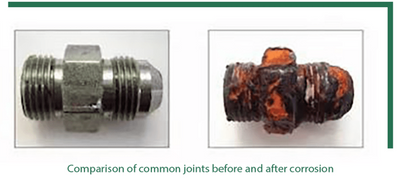
Corrosion on a hydraulic adapter is evidence about the environment, material, installation, and maintenance history. A useful inspection does more than note that the fitting looks rusty. It identifies where attack began, whether a sealing or pressure-carrying surface is affected, and what must change before the replacement is installed.
Map the location before judging severity
Photograph the fitting in place and note moisture traps, salt deposits, chemical residue, contact with dissimilar metals, and damage from tools. Rust at wrench flats may follow coating damage during assembly. Attack beneath a clamp or against a manifold can indicate a crevice that remains wet. Corrosion concentrated on the lowest surface may point to drainage rather than fluid leaking from the connection.
Then clean only enough to see the surface. Do not grind a pressurized fitting or polish away evidence needed for the failure review. Isolate and depressurize the equipment under the approved maintenance procedure before touching the connection.
Distinguish coating failure from base-metal loss
Carbon-steel adapters commonly depend on a zinc-based or other specified finish for external protection. White or gray corrosion products can indicate consumption of a zinc coating; red-brown rust shows that iron-containing material is participating. Scratches, thin edges, threads, and damaged hex corners may reveal base steel first.
Discoloration on stainless steel is not proof that the part is sound or failed. Tea staining, embedded iron, pitting, and crevice corrosion have different implications. Chlorides, deposits, stagnant moisture, temperature, and alloy grade influence the result. Material identity should be verified from records or controlled testing rather than appearance alone.
Give sealing areas higher priority
Pitting on a JIC seat, ORFS face, O-ring groove, bonded-washer spotface, flange face, or tube sealing cone can create a leak path even when the fitting body remains strong. Corroded threads can change engagement and make removal unpredictable. Deep section loss, cracking, deformation, active leakage, or attack at a brazed or welded joint requires removal from service under the facility’s safety rules.
Surface staining away from the seal may warrant cleaning and closer evaluation, but repainting or applying a new coating does not restore unknown wall thickness or a damaged sealing surface. Replacement criteria should be defined by the equipment owner and applicable component guidance.
Correct the exposure before installing another adapter
Replacing carbon steel with stainless may be sensible in washdown, marine, fertilizer, chemical, or road-salt service, but alloy alone does not solve trapped water, incompatible media, galvanic contact, or bad routing. Confirm pressure and temperature rating, connection geometry, seal material, alloy or coating specification, and mating-component compatibility.
Keep the removed part, lot or supplier identification, photographs, and service history when the failure is significant. A short record of location, time in service, cleaning chemicals, and corrosion pattern helps purchasing and maintenance choose a better material system instead of repeating the same exposure with a new-looking part.