
Seal Hydraulic Fittings at the Designed Surface Instead of Adding Torque
HGW Hydraulics on Mar 19th 2024
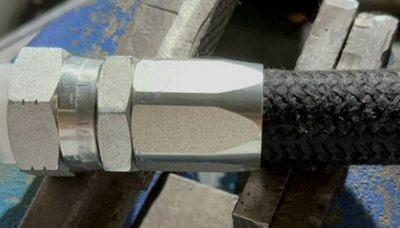
A hydraulic fitting stops leaking only when its intended sealing surfaces meet in the required condition. Extra torque cannot create a missing O-ring, change a 45-degree seat into a 37-degree flare, or restore cracked port threads. It can convert a repairable seep into a separated hose or damaged manifold.
Identify the seal before selecting a remedy
NPT and other tapered pipe threads use controlled thread interference and normally an approved sealant. JIC seals at a 37-degree metal flare. ORFS seals with an O-ring on a flat face. ORB seals at the entrance of a straight-thread boss port. BSPP and metric connections can use washers, O-rings, or cones; flareless fittings use ferrules or rings.
Write the thread and seal as one description. The threads may provide retention while another surface contains pressure. Sealant placed on the retaining threads does not improve that separate seat.
Depressurize and locate the true leak path
Follow the machine energy-control procedure, support loads, release accumulators or trapped branches as specified, and let hot components cool. Clean the area and observe from a protected position during an authorized test. Oil can travel along a hose or casting, so the wettest fitting is not always the source.
Never lean over a pressurized line or use a hand to feel for a pinhole. If tightening did not stop the leak within the permitted procedure, shut down and inspect rather than trying another turn under pressure.
Inspect metal-to-metal seats as matched pairs
For JIC and other flares, examine both male and female faces for scratches, dents, corrosion, debris, wrong angle, and uneven witness marks. Misalignment, tube load, and hose twist can prevent full contact. Replacing only the male fitting may leave a damaged female swivel or tube flare.
Straight flare threads normally do not need pipe-thread sealant. A product applied as a thread locker under a specific procedure performs a different function and should not be described as sealing the 37-degree seat.
Flareless and compression fittings require matched body, nut, ferrule or ring, tube material, preparation, and assembly. Repeated additional tightening can damage the grip or tube and may exceed remake limits.
Treat O-ring connections as elastomer systems
ORB and ORFS need the exact O-ring size and compound for fluid and temperature. Inspect for cuts, extrusion, swelling, hardening, flattening, and installation twist. Check groove, chamfer, spotface, backup washer, and face condition.
Replace service seals as required and use only compatible approved lubricant. Do not place tape or paste on ORB or ORFS straight threads to compensate for a damaged O-ring or sealing land.
Apply pipe-thread sealant under controlled instructions
For NPT or another specified thread-sealing taper, choose tape or compound compatible with media, temperature, component materials, and system cleanliness. Follow product guidance for cleaning, thread coverage, application direction, cure, engagement, and final orientation.
Keep loose tape and excess compound away from the first thread and bore. Sealant lubricates the joint and changes torque, so adding more can encourage over-engagement and port cracking. Do not assume a named sealant’s published pressure or temperature rating establishes the hydraulic fitting rating.
NPTF and other dryseal designs have their own standards and product instructions. Whether supplemental sealant is allowed or needed depends on the actual connection and application; avoid universal prohibitions or approvals.
Protect the port from wrong torque
Tightening requirements vary with connection, size, material, coating, lubrication, seal, fitting geometry, and port strength. Brass, stainless, coated steel, aluminum, polymer, and cast ports do not respond identically. Use manufacturer or equipment instructions and calibrated tools where specified.
Start verified threads without cross-threading. For an adjustable elbow, use the designed locknut or orientation method rather than forcing a tapered fitting another full turn. Support the line so its weight and movement do not pry the connection loose.
Record and correct repeat failures
If a connection leaks again, preserve the parts, photographs, torque or assembly record, seal information, pressure events, and routing. Investigate port damage, vibration, thermal cycling, material compatibility, incorrect identification, and unapproved component combinations.
The practical sealing rule is to stop at the designed surface: taper on taper with approved sealant where required, matching metal seats in clean alignment, or the correct elastomer compressed in an undamaged land. Controlled assembly creates the seal; unlimited torque only hides the reason it was missing.