
Locating Harmful Backpressure in Hydraulic Return, Drain, and Exhaust Paths
HGW Hydraulics on Sep 23rd 2025
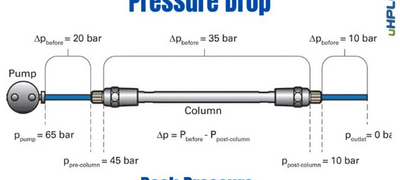
Backpressure is pressure opposing the intended flow path. Some circuits use controlled downstream pressure for load control or valve function. Harmful backpressure appears where a component expects a low-pressure return, case drain, pilot drain, tank line, or exhaust path and instead sees resistance that changes its behavior.
The diagnosis requires two locations and a flow condition—not a single gauge reading labeled “backpressure.”
Every restriction creates a pressure requirement
Fluid moving through hose, tube, fittings, valves, filters, coolers, manifolds, and ports loses pressure because of friction and local geometry. Loss rises with flow and depends on bore, length, viscosity, density, bends, surface, and component design.
A restriction can be intentional, such as a flow-control valve, or unintended, such as a kinked hose, undersized fitting, clogged filter, closed valve, blocked cooler, or long shared return. Cold viscous oil can create temporary high loss even when the path is clean.
Return backpressure changes actuator behavior
Pressure at a cylinder’s returning side subtracts from useful force and can alter speed. On motors, outlet pressure changes torque and bearing or seal loads. A shared return can make one function influence another as flows combine.
Meter-out and counterbalance circuits deliberately manage downstream pressure for overrunning loads. Their settings and stability depend on the designed return condition. Removing all backpressure indiscriminately can be as wrong as ignoring excess pressure.
Case and pilot drains have special limits
Pump and motor case drains carry internal leakage and help control housing pressure. Excess drain pressure can damage shaft seals, alter internal control, raise heat, or shorten component life. Follow the component’s maximum and transient case-pressure limits and routing instructions.
Externally drained valves, pressure controls, and pilot circuits can shift settings or become unstable when their drain sees variable pressure. A drain symbol is not permission to tee into the nearest return.
Filters and coolers create changing resistance
Filter differential pressure increases as contamination loads the element and as oil becomes colder or more viscous. A bypass valve may open to protect the element, but bypassed oil is not receiving the intended filtration.
Cooler passages, thermostats, check valves, and long lines add loss. A return filter or cooler sized for average flow may see a much larger transient when several cylinders retract together.
Measure upstream and downstream under the symptom
Install rated instruments at defined test points using the safe procedure. Measure pressure before and after the suspected restriction and record flow, fluid temperature, machine state, and which functions are active. Differential pressure identifies the component’s contribution.
A zero-flow static reading cannot reveal dynamic line loss. Conversely, high tank-line pressure at one point may be normal if the component is designed for it. Compare with schematics and manufacturer limits.
Never loosen a live fitting to test for return flow or use a hand to find a leak.
Correct the cause without removing protection
Replace a collapsed hose, open a wrongly positioned valve, service a filter, clean a cooler, correct fluid viscosity, or resize a line after confirming the fault. Review internal bore of quick couplers, adapters, elbows, and manifolds; nominal end size can hide a small passage.
Separate critical case drains or pilot drains where required. Reroute returns to avoid interaction and use reservoir entry arrangements that limit aeration. Do not drill out a component or defeat a bypass without engineering approval.
Verify across the duty cycle
Repeat measurements during cold start, warm operation, peak combined flow, and relevant actuator motion. Confirm temperature, seal condition, valve settings, actuator force, and noise after correction.
Backpressure is not one component failure. It is the pressure consequence of an entire downstream path. Mapping where the system expects controlled pressure and where it expects free drainage turns a vague symptom into measurable, correctable resistance.