
Stop a Four-Bolt Flange Mismatch Before Any Hole Is Modified
HGW Hydraulics on May 4th 2022
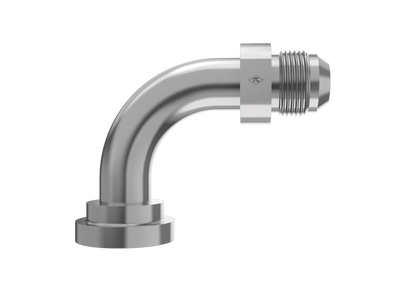
If a four-bolt flange does not align with a port, the correct response is to stop. Filing holes, substituting bolts, thinning a head, or forcing clamps changes a pressure boundary without engineering verification.
Code 61 and Code 62 are different systems
SAE Code 61 and Code 62 flange patterns can appear close, but bolt spacing, flange head dimensions, clamps, fasteners, O-ring geometry, and ratings differ. Measure both bolt-pattern axes and the flange head rather than checking one hole.
Pressure capability varies by nominal size, material, temperature, and component. Do not attach one 3,000/6,000 psi number to every flange in a code.
OEM-style heads add another near-match
Some equipment uses flange heads that resemble SAE patterns but differ in thickness or other dimensions. Caterpillar-style and other OEM configurations must be confirmed from the machine drawing, serial range, and part data.
Four holes plus a matching O-ring diameter do not establish interchangeability.
Inspect the whole joint
Record port pattern and recess, head thickness/diameter, O-ring, clamps, bolt thread/grade/length, washer, body orientation, and connected hose or tube. Inspect faces for scratches and corrosion.
Align piping without bolt force. Use the specified tightening sequence, lubrication condition, and torque/preload method. A bolt that reaches torque while a flange is cocked does not create correct gasket load.
Treat mismatch as controlled nonconformance
Quarantine the uncertain part, preserve photographs and measurements, and resolve the drawing or inventory error. Do not modify a 6,000 psi component to fit a lower-rated port—or the reverse.
After installing the verified assembly, test under the approved procedure and inspect through machine motion. The safest flange mistake is the one caught before a tool removes metal.
Do not reuse the wrong O-ring or clamps
An O-ring must match flange size, groove, fluid, temperature, and pressure. A ring that sits in the recess can still have the wrong cross-section or compound. Inspect for cuts, flattening, swelling, and contamination and replace as specified.
Split clamps are part of the joint, not generic brackets. Check series, material, dimensions, bolt seating, and damage. Mixing one clamp half from another system can create uneven load.
Control hose and tube alignment before bolting
The flange head should meet the port squarely without using fasteners to bend a rigid tube or pull a hose sideways. Correct supports, length, clocking, and route first. Added adapters can create leverage at the port and alter minimum bore.
Tighten in the documented cross sequence and stages. Tool calibration, lubricant condition, bolt reuse, and temperature affect clamp load. Do not retorque an operating joint unless its instruction requires that action.
Record the measured configuration
Capture nominal size, code/OEM style, port and head dimensions, bolt pattern, head thickness, O-ring, clamps, fasteners, pressure-temperature rating, and machine serial context. Link photographs and the approved part drawing.
If a mismatch came from a mislabeled bin or cross-reference, inspect related stock and correct the register. Preventing the next wrong selection is part of closing the repair.