
Use Hydraulic Flange Blanks for a Controlled Closed Port
HGW Hydraulics on Apr 13th 2022
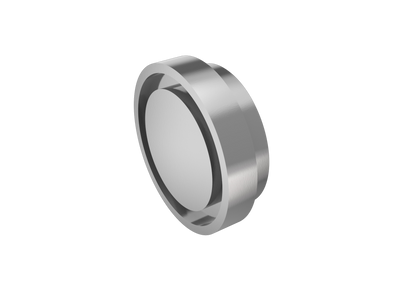
A hydraulic flange blank closes a port by presenting a solid pressure boundary in place of a through-bore connector. It can isolate an unused pump or manifold port, support a controlled service configuration or close a line end designed for that flange system.
It must not be confused with a plastic dust cap or shipping protector.
Define whether the closure holds pressure
A protective cap keeps dirt from a disconnected component during storage or transport and may have no pressure rating. A flange blank intended for operation needs a documented pressure and temperature capability with the correct sealing system and hardware.
Temporary maintenance isolation also requires a safe energy-control plan. Installing a blank does not prove that trapped fluid, accumulators or connected loads are controlled.
Match the flange as a complete pattern
Record Code 61, Code 62, ISO series, JIS or the exact OEM pattern; then verify nominal size, port, bolt spacing, blank dimensions, O-ring groove, clamps and fasteners. A solid plate that covers the opening is not necessarily a qualified flange blank.
Use the specified O-ring size and compound. Some closures contain the groove in the blank while others mate to a defined port arrangement. Confirm where the seal belongs.
Check the effect on the circuit
Closing a port changes flow. Confirm that the port is permitted to be blocked in the selected machine state and that no pump, thermal expansion volume, relief path, drain or control function depends on it.
Do not use a flange blank to conceal an unidentified or leaking circuit. Trace the schematic and label the closure so future technicians know whether it is operational, temporary or reserved for an option.
Assemble and document the closure
Inspect the port face and groove, clean the parts, install the seal without twist and align the blank. Use the specified clamps, screws, property class and tightening sequence. Bolts should not be used to flatten a distorted plate or pull a misaligned part into place.
After safe pressure restoration, inspect without entering the potential spray path. Record the blank identity, installation date, reason, circuit condition and required removal authorization.
For storage, cap the removed open conductor separately so contamination control does not depend on the pressure blank at the machine.
A useful flange blank creates a deliberate, rated and traceable boundary. A cover-shaped object creates only the appearance of closure.