
Match Hydraulic Hose Protection to Abrasion, Heat, Bend, and Line-of-Sight Risk
HGW Hydraulics on Feb 29th 2024
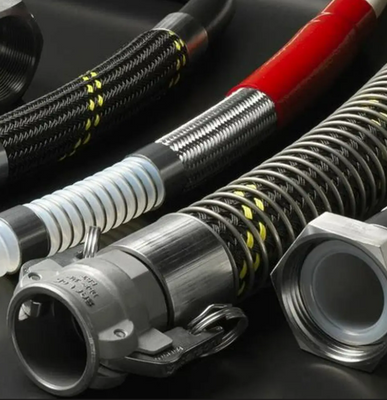
Hose protection should address a known external hazard without hiding damage, trapping heat, restricting movement, or forcing the assembly below minimum bend radius. No sleeve or guard upgrades an incorrectly rated hose or repairs an assembly whose reinforcement, cover, or coupling is already damaged.
Map the hazard along the hose route
Observe the equipment through its full motion. Mark rub points, sharp edges, pinch zones, debris impact, worker line of sight, hot surfaces, UV, chemical splash, hose-to-hose contact, crush exposure, and excessive bend near the fitting. Different sections of one assembly may need different controls.
Correct the route first where possible. Move a clamp, add clearance, change port orientation, or remove twist before covering the line. A sacrificial product is useful when contact cannot be eliminated and its condition remains inspectable.
Use containment sleeves for spray exposure only as specified
Some hydraulic hose sleeves are designed to contain or diffuse a pinhole jet or burst spray and reduce line-of-sight exposure. Their performance depends on sleeve material, size, overlap, end retention, pressure scenario, and installation. A generic textile cover should not be advertised as personnel protection without documented qualification.
Sleeves also provide abrasion and bundle protection. Keep enough clearance for hose movement and follow requirements for securing the ends. Operators must still isolate pressure and never use a hand to search for a leak.
Use wraps where replaceable surface wear is the main problem
Ballistic nylon or other hose wraps can take external abrasion and can bundle compatible lines. Hook-and-loop or similar removable designs may allow inspection and replacement of one hose without dismantling the entire group.
Bundling changes heat dissipation and movement. Hoses rubbing inside a tight bundle can still wear, and a leaking line can contaminate adjacent assemblies. Select material for oil, chemicals, UV, temperature, moisture, and flame-related requirements. Replace the wrap when wear reaches its defined limit instead of waiting for the hose cover to appear.
Vinyl-coated fabric and other wraps can provide weather, mildew, dielectric, or chemical features only when the product data supports them. “Dielectric” is application-specific and should not be inferred from appearance.
Use spiral and spring guards for mechanical exposure
Polymer spiral guard can wrap around an installed hose or bundle and provides sacrificial resistance to rubbing and impact. Check inside size, wall, material, temperature, UV, chemical exposure, edge design, and retention. Too small a guard can bind the hose; too large can move away from the contact point.
Steel spring guards can protect localized areas from abrasion and help distribute bending near an end. Their corrosion finish, pitch, diameter, end treatment, and attachment should match the environment. A spring cannot make an excessively short assembly or wrong bend radius acceptable.
Treat bend control and support as geometry devices
Bend restrictors support the hose near a coupling or through a known curve. Grip shrink tubing may secure a sleeve or reinforce an external transition where the hose system permits it. Hanging straps, cinch straps, and clamps support weight and control routing.
None should squeeze the hose, cut the cover, carry it over a sharp edge, or block required movement. Maintain straight length near the coupling and avoid concentrating load at the guard end. Safety straps or restraint devices need specific design data for the credible separation event.
Select heat and fire products from real exposure
Fire sleeves and thermal guards can reduce radiant or short-duration heat exposure when properly specified. Record continuous and peak temperature, flame or molten-splash scenario, distance, duration, fluid, and surrounding airflow. A sleeve can trap heat from the hose, so the underlying hose temperature rating remains essential.
Keep protection away from moving parts and exhaust where the product instructions require it. Inspect after a heat event; an intact-looking outer layer may conceal a hardened or damaged hose.
Include plugs, caps, coding, and rod protection in the right category
Protective plugs and caps control contamination during storage and service; they are not abrasion guards. Color-coded shrink or labels help identify circuits but should not hide required markings. Cylinder-rod covers protect rods and seals, but their cost and performance should be evaluated independently from hose wrap.
Make protection inspectable and replaceable
Record product, location, hazard, installation method, and inspection limit. During maintenance, move or open the protection as permitted to inspect the hose cover, reinforcement, couplings, and contact points. Look for migration, trapped debris, moisture, chemical attack, crushing, and heat discoloration.
A good protection plan is layered: correct hose and ends, safe route, adequate guards and supports, visible condition, and scheduled inspection. The protection sacrifices itself where intended while leaving enough evidence to replace it before the hydraulic assembly is compromised.