
Control Hydraulic Hose Risk at the Failure Mechanism
HGW Hydraulics on Aug 10th 2021
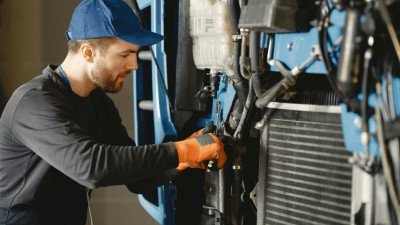
Hydraulic hose safety is not achieved by adding a sleeve after damage begins. The safer approach identifies stored energy, spray exposure, motion, heat, abrasion and connection loads at each hose location, then controls the mechanism that can release fluid.
A maintenance program should make an unsafe condition easier to find and remove, not merely make the hose look protected.
Make the machine safe before touching a leak
Follow the equipment isolation procedure, lower or mechanically support suspended loads, shut down energy sources and release trapped pressure through the approved method. Pressure can remain behind check valves, accumulators and loaded actuators after the pump stops.
Never use a hand or bare skin to locate a pinhole leak. Escaping hydraulic fluid can penetrate tissue and requires urgent medical evaluation. Use appropriate inspection methods from a safe distance and treat hot fluid, moving equipment and slippery contamination as separate hazards.
Tightening a connection while it is pressurized or repeatedly turning a leaking nut is not diagnosis. A damaged seat, seal, port or crimp can worsen when extra torque is applied.
Trace end failures back to alignment and routing
Inspect beyond the wet spot. A leak at the coupling may begin with hose twist, a bend too close to the end, vibration, an unsupported adapter stack or a clamp that prevents normal movement. Reinforcement fatigue often develops at the transition between flexible hose and rigid fitting.
Observe the route through its intended machine motion under the safe procedure. Look for rub marks, flattening, sharp bends, pulling, interference and changes caused by a replacement with different length or stiffness.
Correct the support or geometry when it caused the failure. Installing the same assembly into the same forced route repeats the mechanism.
Keep hose, coupling and crimp data together
A hose assembly is a qualified combination rather than a collection of parts that happen to fit the crimper. Verify hose family and size, coupling series, stem and ferrule, tooling, crimp setting, insertion depth and inspection limits.
The line also needs the required working-pressure capability, fluid and temperature compatibility, bend radius, cover properties and end standards. Do not treat a generic burst-to-working ratio or an impulse-cycle figure as a guaranteed life for the installed machine.
Mixing unverified components can cause pull-off, leakage or damage even when the crimp appears normal. If an alternative system is proposed, require its own assembly data and applicable qualification.
Use protection for a defined hazard
Abrasion guard can shield the cover at a controlled contact point. Bend protection can support an end transition. A qualified line-of-sight sleeve can help contain or redirect spray. Heat protection addresses a measured thermal exposure.
None of these repairs an incompatible hose, inadequate pressure rating or poor route. Protection must not hide inspection areas, trap abrasive material, interfere with motion or create a hard edge at its termination.
Where people can approach a pressurized line, apply guarding, separation and maintenance controls appropriate to the hazard rather than depending on sleeve claims.
Record what failed and what changed
For each replacement, capture machine and hose location, date, operating symptoms, failure mode, fluid, hose identity, end connections, length, orientation, guards and photographs of the installed route. Record whether leakage came from the tube, cover, crimp, swivel, flare, O-ring, pipe thread or equipment port.
Repeated failures at one location are evidence. They can point to routing, heat, pressure transients, contamination, wrong parts or incomplete assembly. Without a record, every repair begins as a guess.
Replace by condition and approved criteria
Inspect for cover cuts, exposed or corroded reinforcement, blistering, hardening, kinks, crushed sections, coupling movement, seepage and damaged seals. Use equipment and hose-manufacturer rejection criteria; a universal calendar interval cannot represent every duty cycle.
After installation, verify cleanliness, routing, clearance, clamp placement and connection integrity. Restore pressure using the approved start-up method while people remain outside the potential spray path.
The most costly hose mistake is not one specific assembly error. It is treating the visible leak as the whole problem and returning the machine to service without controlling why the pressure boundary failed.