
Manage Hydraulic Hose Temperature at the Tube, Cover, and Coupling
Jul 27th 2022
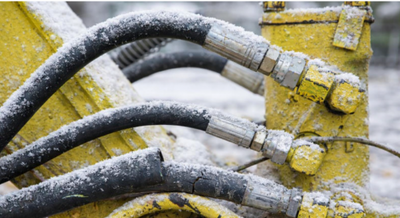
A hydraulic hose experiences temperature from both sides. Fluid heats the inner tube and coupling interface, while engines, exhaust, sunlight, weather and nearby process equipment affect the cover. The two temperatures can be different at the same moment.
Hose selection and diagnosis should record both instead of relying on one reservoir reading.
Compare continuous and intermittent limits
Hose datasheets can distinguish continuous service from short excursions. The limit may also change with fluid type or pressure. Use the exact hose and size rather than a general rubber-hose value.
Temperature capability of the assembly is limited by the hose tube, cover, reinforcement interface, coupling, seal and any guard. A metal fitting that tolerates heat does not upgrade the attached elastomer.
Treat cold start as a dynamic event
Cold oil can be more viscous, increasing inlet restriction and pressure loss while hose and seals may be less flexible. Machine movement before the system reaches its intended range can load a stiff hose route or coupling transition.
Follow equipment warm-up guidance and inspect lines that flex during startup. Pour point or ambient temperature alone does not define a safe operating viscosity.
Map local hot zones
Reservoir temperature can appear normal while a hose near exhaust, a throttling valve or a heavily loaded pump sees more heat. Measure at defined locations and operating states using appropriate methods.
Increase clearance from hot surfaces, add approved shielding or reroute when practical. A sleeve can reduce a defined radiant or contact exposure, but it can also trap heat if selected without analysis.
Understand thermal cycling evidence
Repeated heating and cooling can change flexibility, accelerate hardening and stress the tube-to-coupling transition. Look for cover cracks, blisters, seepage, stiffness and changes after a duty-cycle increase.
Not every thermal failure is sudden or invisible. Trend temperatures and inspection findings rather than assuming a hose will reach a fixed service life.
Evaluate the fluid separately
Hydraulic oils oxidize faster as temperature rises, but one 180-degree-Fahrenheit threshold is not universal. Fluid formulation, equipment guidance, exposure time and contamination influence degradation.
Use oil analysis, viscosity and condition data when overheating is suspected. Fix cooler performance, relief flow, internal leakage, restriction or reservoir problems rather than substituting a “high-temperature hose” for a thermal fault.
Build the replacement envelope
Specify fluid, normal and excursion temperature, ambient and radiant exposure, working and transient pressure, bend radius, motion, cover needs, hose standard, coupling series and seals. Confirm derating or compatibility from current product data.
Temperature management extends beyond the hose. It aligns routing, fluid condition and the complete connection with the machine's real operating cycle.