
Build Hydraulic Maintenance Checklists Around Stored-Energy Control
HGW Hydraulics on Dec 21st 2023
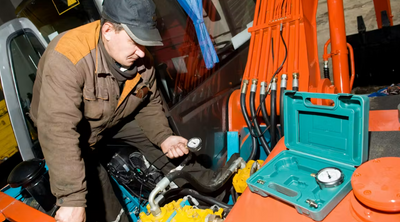
A hydraulic maintenance checklist is effective only if it controls the energy that can move equipment or release fluid. Checking boxes after a fitting has been loosened is too late. The procedure must identify pressure, gravity, springs, accumulators, heat, electrical power, and external loads before work begins.
Define the machine-specific safe state
Follow the employer’s energy-control program and equipment instructions. Shut down the machine, isolate energy sources, apply lockout or other authorized controls, dissipate or restrain stored energy, and verify the state before maintenance. A gauge reading zero at one point does not prove that every branch, accumulator, cylinder, or trapped line is depressurized.
Lower attachments or mechanically support them using approved blocking. Hydraulic pressure alone should not hold a raised load over a worker. Account for gravity, counterbalance circuits, thermal expansion, and pressure trapped between closed valves or quick couplings.
Only trained and authorized personnel should perform tasks within their qualifications. The checklist should identify who owns isolation, who verifies it, and what conditions require engineering, safety, or OEM support.
Control hot fluid and injection hazards
Hydraulic oil, components, and nearby surfaces can remain hot after shutdown. Allow controlled cooling or use specified protective measures. Fluid additives can irritate skin and eyes, while a high-pressure pinhole can inject fluid beneath the skin even when the leak looks small.
Never use a hand or bare skin to search for leakage. Use a safe detection method, appropriate guarding, and distance. Suspected injection injury requires immediate emergency medical evaluation and clear communication that high-pressure fluid may have entered the body; the external wound can appear minor.
Hoses and fittings can move violently if restraint fails. Keep people out of the line of fire, support components, and use pressure-rated barriers or remote testing methods where required.
Separate preventive and corrective work
Preventive maintenance is planned work that reduces the likelihood of failure: fluid and filter service, contamination control, inspection, torque or adjustment only where specified, sensor checks, and replacement based on condition or interval. Corrective maintenance addresses a discovered leak, damaged hose, abnormal temperature, contamination, pressure drift, or failed component.
Finding a defect during preventive work should trigger a controlled corrective job, not an improvised repair while isolation or parts are incomplete. Record the defect, equipment condition, risk, disposition, replacement specification, and approval to return to service.
Make inspection evidence specific
For hoses, inspect abrasion, cracking, hardening, soft spots, blisters, exposed reinforcement, kinks, twist, heat damage, coupling movement, and leakage. For tube and fittings, inspect corrosion, fretting, damaged clamps, distorted flares, cut O-rings, loose supports, and signs of misalignment.
Review reservoir level, fluid appearance, laboratory or field analysis where used, filter indicators, temperature trends, pressure readings, pump noise, actuator drift, and cooler condition. A single clean-looking oil sample or normal gauge value should not erase a worsening trend.
Photograph and label removed parts when failure analysis is needed. Keep time, machine hours if available, operating mode, measured data, and technician observations. That information turns the next checklist revision into a response to real equipment history.
Control parts, tools, and cleanliness
Replacement hose, fittings, seals, and adapters must match pressure, temperature, fluid, connection, and assembly requirements. Verify current drawings and product data. Do not substitute a close-looking thread, reuse a permanent crimp fitting, or install an unknown O-ring compound.
Use calibrated or verified gauges, torque tools, crimp equipment, contamination-control supplies, and test devices as required. Cap open lines, clean mating surfaces, and prevent dirt or old sealant from entering the system. Tool condition and test-equipment identification belong on the checklist for critical work.
Plan restart before opening the system
Define who inspects the completed work, how guards and supports are restored, what test pressure or functional sequence is allowed, and where people must stand. Remove tools and temporary closures, confirm fluid level and valve position, and communicate before energy is restored.
Bring the system back under controlled conditions. Watch remotely or from a protected position for leakage, unexpected movement, noise, heat, and pressure. Stop and re-isolate if the result differs from the approved plan. Never tighten or feel a connection while it is pressurized.
Keep the checklist alive through training and review
Technicians need recurring training on the specific equipment, energy-control procedure, fluid-injection response, sampling, instruments, data recording, and limits of their authority. Supervisors should review near misses, failures, and corrective work to update the checklist.
A strong maintenance culture does not measure success by how quickly a line is opened. It measures whether energy was controlled, the defect was correctly identified, compatible components were installed cleanly, results were verified, and evidence was preserved for the next service interval.