
Assemble JIC 37-Degree Connections from Clean Seat to Verified Tightening
HGW Hydraulics on Oct 19th 2021
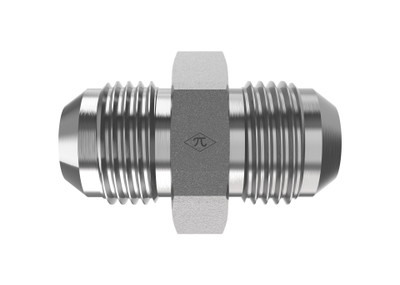
A JIC connection contains pressure where the male and female 37-degree surfaces contact. Its straight thread provides clamping force; it is not a tapered thread seal. Reliable assembly therefore begins with the flare faces and alignment, not with applying more thread sealant or torque.
Tightening values and turns must come from the exact product guidance because size, material, plating, tube condition and lubrication affect the joint.
Confirm that both halves are 37-degree hydraulic parts
Identify thread size and pitch, tube or hose size, gender and seat angle. A dash number commonly relates to conductor size in sixteenths of an inch, but it is not a universal way to calculate the thread diameter.
Do not mix a 37-degree JIC seat with a 45-degree plumbing or refrigeration flare, or with a 30-degree international cone. Threads may appear to engage while the sealing surfaces contact only at an edge.
SAE J514-family geometry covers 37-degree flared fittings for general industrial and commercial hydraulic use. An aerospace drawing or another governing specification can impose different material, dimensional and qualification requirements even when the physical flare is similar.
Inspect the parts before lubrication
Depressurize and clean the connection before opening it. Examine the male cone and female flare for circumferential scoring, dents, corrosion, cracks, embedded particles and evidence of prior overtightening. Inspect the nut and threads for galling or deformation.
Tube flare condition matters as much as the adapter. An off-center, thin, cracked or work-damaged flare should be remade according to the applicable tube procedure rather than pulled flat with the nut.
Replace damaged parts. A sealant or soft washer added to a metal flare is not a normal repair unless the fitting system specifically calls for it.
Align without using the nut as a lever
Bring the tube or hose into position without side load. Start the nut by hand and verify smooth engagement. If the conductors do not meet squarely, correct their routing or supports before tightening.
Hold the adapter at its wrench pad where provided so tightening does not rotate a pipe thread, adjustable stud or nearby component. Keep hose twist out of the assembly and respect the required bend length behind the end fitting.
Follow one documented tightening method
The product instructions may specify torque, flats from wrench resistance, or another controlled method. Use the table for the exact size, material and condition rather than copying a generic chart from a different manufacturer.
Lubricated and dry values are not interchangeable. When the procedure calls for compatible hydraulic fluid or lubricant on threads and specified surfaces, apply it sparingly and consistently. Do not lubricate by habit where another instruction controls, and do not describe a JIC fitting as having an O-ring unless the actual assembly includes a separate O-ring feature.
For a flats method, establish the defined reference point, mark nut and body, and turn only the specified amount. A universal one-eighth or one-quarter turn is not correct for every size and assembly condition.
Diagnose leakage before retightening
Restore pressure through the approved machine procedure with personnel clear of the spray path. Inspect without using hands to search for a pinhole leak.
If leakage appears, depressurize and locate whether it comes from the 37-degree seat, another end of the adapter, a crack, tube wall or hose crimp. Repeated tightening can yield the flare, distort threads and hide the original defect.
After disassembly, recheck alignment and look for a contact ring on the seat. Uneven contact points toward geometry, damage or side load rather than insufficient torque alone.
Preserve the method for repeat repairs
Record part identity, size, material, tightening procedure, tube or hose condition and any replaced adapter. For fleet maintenance, keeping the approved method with the assembly drawing prevents technicians from combining torque tables from unrelated systems.
A JIC connection is serviceable because its metal seats can be inspected. That advantage is lost when identification, alignment and tightening are reduced to “turn until the leak stops.”