
JIC vs NPT: One Seals on a 37° Flare, the Other in a Tapered Thread
Dec 8th 2022
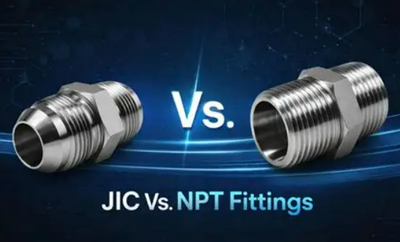
JIC and NPT fittings can both appear on North American hydraulic equipment, but they create seals in different places. JIC uses straight threads to clamp two 37-degree flare seats together. NPT uses a tapered pipe thread that develops interference as the male and female parts engage, normally with the specified sealant practice.
That difference means a caliper reading or a thread that starts turning is not enough to identify the connection. The thread form, taper, pitch, seat, and mating port all have to agree.
JIC threads provide clamp load for a flare seat
JIC dimensions are associated with SAE J514. The male fitting has a 37-degree cone and straight UN/UNF-type threads; the female swivel or tube end has the matching flare. Tightening draws the two metal seats together.
Because the thread is not the primary fluid seal, thread tape or pipe sealant does not repair a scratched JIC seat. Inspect the cone and flare for scoring, cracking, deformation, and embedded debris. Correct torque depends on size, material, condition, and the applicable assembly instructions.
Other 37-degree systems exist. AN requirements, thread class, material, and qualification can differ from ordinary industrial JIC. JIS and Komatsu connections may use different seat angles or thread standards. Equal-looking cones should be measured rather than assumed interchangeable.
NPT develops sealing interference along a taper
NPT is standardized by ASME B1.20.1. Its male and female threads taper, and the 60-degree thread form tightens progressively with engagement. NPTF dryseal is related but has controlled crest and root interference requirements; the two terms should not be used casually as identical specifications.
An NPT joint normally requires the sealant method approved for the fluid, temperature, and system. Sealant should not be allowed to enter the flow path. Repeated assembly can wear or distort tapered threads, and overtightening can crack a female port or fitting.
NPT is common on pumps, valves, gauges, legacy equipment, and general pipe connections. Availability does not make it the preferred seal for every vibration, pressure-cycle, or service condition.
A near-fit can damage both components
A tapered NPT male may begin to enter an unrelated straight-thread female port. That does not create a valid seal. Increasing torque can damage threads, split the port, or leave metal particles in the system.
Identification should record male or female, measured diameter, threads per inch, taper, sealing surface, and the component on the opposite end. A JIC-to-NPT adapter is the correct way to transition when both systems are required; it preserves a valid 37-degree seal on one end and a valid pipe-thread joint on the other.
Choose from the equipment interface outward
Match the existing port standard first. Then check size, material, body shape, pressure-temperature rating, media compatibility, vibration, and service access. JIC can provide a serviceable flare connection across many hydraulic routes. NPT can remain appropriate where the component is designed for a tapered pipe thread and the joint can be assembled without orientation or repeated-service problems.
Neither family has one universal pressure advantage. Rating varies with size, material, configuration, temperature, and manufacturer. The reliable choice is the fitting that forms its intended seal in the specified port—not the one whose threads can be forced farthest.