
Treat JIC and AN as Separate Specifications That Share a 37 Degree Interface
Sep 14th 2023
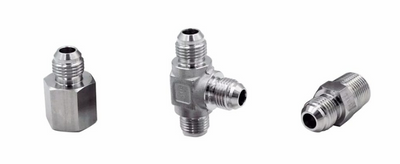
JIC and AN parts can share nominal tube sizes, straight threads, and a 37-degree metal flare. Those similarities explain why some components can physically mate. They do not make the two labels interchangeable procurement specifications, especially when aviation, defense, motorsport, or other controlled hardware requirements apply.
Define the interface before comparing the product
At the connection, a male 37-degree cone meets a female flare. The straight threads and nut create clamp load; the sealing line is on the mating metal surfaces. Record tube or dash size, actual thread diameter and pitch, male or female form, seat dimensions, and material.
JIC hydraulic fittings are commonly associated with SAE J514 and ISO 8434-2. AN terminology grew from military and aviation connection systems, but a commercial product called “AN-style” does not automatically meet a current aerospace or military procurement specification. The exact drawing, part standard, revision, and required approval should control.
Read dash size as tube size, not thread size
In common 37-degree flare naming, the dash number generally represents tube outside diameter in sixteenths of an inch. A -8 end corresponds to nominal one-half-inch tube and commonly uses a 3/4-16 thread. The dash label alone does not communicate the thread form, material, class, pressure rating, or fitting configuration.
Avoid descriptions such as “3/4 JIC” unless the record makes clear whether 3/4 refers to tube outside diameter, thread diameter, or another end of the adapter. Put the full connection on drawings and purchase orders.
Verify thread form and tolerance claims from documents
Industrial JIC hardware commonly uses Unified threads defined by its governing product requirements. Aerospace specifications may call for different thread forms or classes, including UNJ-family details in some designs. It is unsafe to assume that every AN-market fitting uses one tighter thread class or that tighter thread fit alone proves better fatigue performance.
Ask for the dimensional standard, inspection requirement, material specification, heat treatment where relevant, finish, traceability, and qualification evidence. A pressure test cannot demonstrate every fatigue, vibration, or material requirement, and a similar-looking root radius cannot be verified from a catalog photo.
Do not rank pressure and vibration by name alone
Pressure capability depends on size, body geometry, material, tube wall or hose assembly, temperature, and manufacturer data. AN does not automatically mean higher pressure, and JIC does not mean that a connection is unsuitable for vibration. Alignment, tube or hose support, flare quality, surface finish, tightening, and machine motion influence both systems.
Where vibration or fatigue consequence is high, evaluate the completed installation and applicable qualification. Do not use a supposed AN advantage to excuse poor clamp spacing, hose twist, unsupported tube, or a damaged seat.
Decide whether mating is allowed for the application
Physical compatibility is only the first question. Confirm 37-degree seat match, thread dimensions, engagement, material, coating, rating, fluid, temperature, and installation instructions. Then check whether the equipment owner, drawing, customer contract, or regulatory program permits the proposed combination.
General industrial hydraulic work may accept a documented JIC solution. Controlled aircraft or defense equipment may require specified approved hardware and records even if a JIC part would screw on. Motorsport products also need component-level data; the AN sales category is not a certification.
Inspect the seal rather than compensating with torque
Clean both flare faces and look for radial scratches, dents, corrosion, cracked tube flares, and uneven witness marks. Align the parts before tightening so the nut does not pull a bent line into the seat. Straight flare threads normally do not need pipe-thread sealant.
If leakage appears, isolate pressure and inspect both sides. Over-tightening can deform the flare without repairing a wrong angle or damaged surface. Reusing an undamaged hard part may be allowed by its instructions, but a scored cone or distorted tube flare should not be returned to service on appearance alone.
Keep inventory identities separate where requirements differ
Label bins and records with the governing standard or approved part number, not only a dash size. Record authorized cross-use by specific family, size, material, and application. If a buyer needs traceability, inspection documents, or customer approval, attach those requirements to the item rather than relying on a sales label.
This approach preserves the value of the shared 37-degree interface while preventing a physical fit from overruling product qualification. JIC and AN can be compared intelligently only after the connection geometry and the complete procurement requirements are both visible.