
Choose JIC or ORFS by the Sealing Surface and Maintenance Risk
HGW Hydraulics on Jun 9th 2021
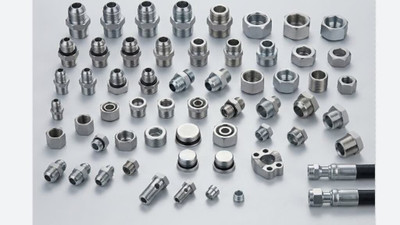
JIC and ORFS fittings can carry the same hydraulic function while controlling leakage in different ways. JIC depends on two 37-degree metal seats; ORFS compresses an elastomer in a flat face. The better choice is the connection whose seal, materials, routing, and service process fit the machine.
Pressure alone does not decide between them. Size, material, temperature, impulse, vibration, fluid, tube or hose end, port geometry, and inspection access belong in the comparison.
JIC needs an undamaged 37-degree contact band
JIC uses straight threads to draw a male 37-degree cone into a female flare seat. The thread provides clamping, but metal contact at the cone retains fluid. Tube assemblies use a properly formed flare; hose assemblies commonly use a female swivel end.
Inspect both seats for a continuous contact area, scratches, dents, cracks, fretting, and distortion. A damaged flare cannot be repaired with pipe sealant or more torque. Misalignment can produce a narrow contact band and side load.
JIC is widely available in mobile and industrial systems and can be practical across broad temperatures because the primary seal is metal. The actual pressure-temperature rating comes from the exact size, material, tube or hose, and manufacturer data—not a single extreme value for all stainless fittings.
ORFS needs a clean groove, O-ring, and flat face
ORFS places an O-ring in a groove at the male face. A female flat-face swivel or tube end compresses the seal while straight threads hold the joint together.
The elastomer can accommodate small surface and vibration effects that a metal flare may not, which makes ORFS attractive in frequently actuated mobile circuits. It also introduces compound compatibility, aging, extrusion, installation damage, and temperature limits.
Inspect the groove and mating face, replace the O-ring when the procedure requires it, and use the specified size, compound, hardness, and lubricant. “90 durometer nitrile” is not universal, and EPDM is not a general petroleum-oil substitute.
Vibration is also a routing problem
ORFS is often chosen where leakage under vibration is costly, but fitting family cannot correct an unsupported hose, rigid tube misalignment, or a route that flexes at the nut. JIC can also perform in dynamic equipment when the assembly, support, and operating envelope are qualified.
Follow the full motion path. Prevent hose twist, maintain bend radius, support tube, and keep fitting weight from loading a valve or manifold port.
Assembly and remake differ
JIC assembly requires clean aligned seats and controlled tightening. Repeated remake can wear or deform metal surfaces; it is not unlimited. ORFS remake requires face inspection and seal control. A reusable body does not mean the old O-ring should always be reused.
Neither design is immune to over-torque. Use the instruction for the exact size, material, finish, lubrication state, and new/remake condition. Hold the mating body with a backup wrench.
Conversion adds two independent interfaces
Adapters can connect JIC or ORFS to ORB, NPT, BSP, metric, tube, hose, or flange ends. Identify each end and its seal independently. A JIC-to-ORFS adapter has a metal flare at one end and an elastomeric face at the other, so both inspection rules apply.
Avoid stacking several adapters to reach orientation. Extra length adds restriction, leak points, and bending moment. For recurring geometry, a controlled single adapter or hose-end design may be preferable.
Decide from failure consequence and supply control
Use JIC where a verified metal-flare interface, temperature exposure, installed base, or field availability supports it. Use ORFS where the flat face and replaceable elastomer provide an advantage for the qualified duty. Consider spare seals, tooling, technician familiarity, cleanliness, and the risk of mixing near-match ends.
Record connection size, material, seal compound, rating, torque or assembly method, and approved supplier. The correct result is not “ORFS is better” or “JIC is universal.” It is a controlled seal whose failure modes and maintenance needs match the machine.
Use failure evidence when replacing an existing design
A recurring JIC seep may come from a scratched cone, poor tube flare, alignment, excessive remake, or vibration at the nut. Converting to ORFS without correcting routing can move the problem to the hose or port. Preserve the old seats and inspect the contact pattern before redesign.
An ORFS leak may come from a cut O-ring, wrong compound, face damage, extrusion, contamination, or insufficient clamp. Replacing the elastomer repeatedly without checking temperature and fluid compatibility is not a complete repair.
For a mixed fleet, keep JIC caps, seat gauges, ORFS plugs, O-rings, and identification tools separated and labeled. Stock common verified configurations based on use and replenishment time; do not create an “equivalent” cross-reference from thread size alone.
When overseas manufacturing supplies U.S. inventory, drawings should control seats, grooves, material, finish, and seal. First-article inspection and batch traceability make the connection choice enforceable after it leaves the design office.