
Separate JIC 37 Degree and SAE 45 Degree Flare Fittings at the Seat
Sep 20th 2023
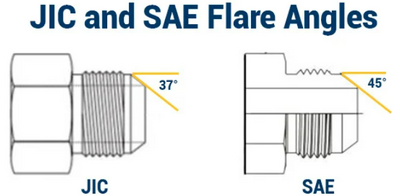
JIC and SAE 45-degree flare fittings can be confused because both are metal-seat tube connections and some sizes use straight threads that appear compatible. The decisive feature is the flare angle. A 37-degree cone and a 45-degree flare touch in the wrong location and cannot be converted into a controlled seal by additional torque.
Identify the connection without using the machine type as proof
JIC 37-degree connections associated with SAE J514 are common on industrial and mobile hydraulic hose and tube assemblies. SAE 45-degree flare fittings associated with SAE J512 appear in automotive, refrigeration, fuel, pneumatic, and general-purpose tube systems. Those are common patterns, not an identification rule.
Modern equipment can combine subsystems from different industries. Brass does not always mean 45 degrees, and steel does not always mean JIC. Determine the seat, thread, size, and standard on the actual component.
Use the flare gauge before the thread chart
Clean the disconnected fitting after safe isolation. Inspect the male cone or female seat with a 37/45-degree identification gauge or controlled optical or dimensional method. A protractor held loosely against a small worn surface may not be precise enough.
Measure thread outside diameter and pitch, then compare them with the appropriate table. Record nominal tube outside diameter or dash size separately. Thread engagement only supplies clamp force, so a shared thread does not override the angle reading.
If the seat is damaged or the first threads are distorted, retain the mating part, equipment drawing, or verified sample. Do not force an unknown part together as a test gauge.
Understand how the wrong angle creates a leak path
Correct flare faces develop an annular contact pattern. With mismatched angles, contact can concentrate at an inner or outer edge. A joint may seem tight during a low-pressure check yet shift, fret, or leak when pressure, temperature, vibration, or tube load changes.
Extra tightening can coin the softer material and leave a temporary witness mark, but it also damages the components. Thread tape, paste, O-rings, or improvised washers do not belong on the flare seat unless the specified fitting design explicitly uses them.
Select from the finished-component rating
JIC is widely used in hydraulic pressure circuits, while many 45-degree fittings serve different fluids and duty ranges. However, it is inaccurate to assign one universal pressure ceiling based only on angle or material. Size, tube wall, alloy, fitting design, temperature, assembly, and product standard control the rating.
A brass 45-degree fitting should not be placed in a hydraulic circuit merely because a steel JIC part of similar thread handled the pressure. A stainless JIC fitting is not automatically compatible with refrigerant, oxygen, fuel, or every chemical. Verify the actual product and system requirements.
Prepare the tube for the chosen system
Use the correct 37- or 45-degree flaring tool, tube material, outside diameter, wall range, nut, and sleeve specified for the connection. Cut square, deburr without thinning the wall, clean the tube, and inspect the flare for cracks, folds, eccentricity, and surface damage.
The flare should seat without the nut dragging the tube out of alignment. Support the tube so vibration and weight do not pry on the connection. Use the fitting manufacturer or equipment torque procedure for the size and material; a universal value can damage brass, stainless, aluminum, or thin-wall tube differently.
Diagnose by the witness pattern
After depressurization, examine the circumference of the male and female seats. One-sided contact can show misalignment. A narrow edge mark may suggest angle mismatch. Radial scoring can reveal debris or rotation under load. Cracks often point back to tube preparation, material condition, or overworking the flare.
Replace damaged components and confirm the port or mating tube before restarting. If a 45-degree and 37-degree part were forced together, changing only the visibly softer side may leave the other seat distorted.
Prevent repeat errors in mixed inventory
Store 37-degree and 45-degree fittings in separately labeled locations. Include angle, tube size, thread, material, and part standard on the bin and work order. Keep seat and thread gauges with the service tools, and record approved adapters where one subsystem transitions to another.
The safe distinction is simple but must be measured: JIC uses a 37-degree seat and SAE 45 flare uses a 45-degree seat. Once that is verified, pressure, fluid, temperature, material, tube preparation, and installation determine whether the specific fitting belongs in the application.