
Use ORFS for a Defined Face-Seal Need, Not as Leak Insurance
HGW Hydraulics on Mar 18th 2026
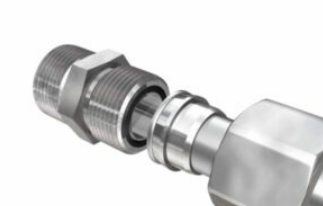
ORFS contains hydraulic fluid by compressing an O-ring between flat faces. This can create a repeatable, serviceable connection in mobile and industrial equipment, but the fitting does not prevent failures caused by any environment or absorb every system stress.
Its value should be tied to a defined sealing problem.
Identify the actual leak mechanism
Leaks can begin with a cut seal, scratched face, misalignment, contamination, wrong tightening, unsupported hose, pressure transients, material incompatibility or a damaged port. Temperature and external environment are contributors, not automatically the number-one cause.
Record where the first wet point appears and inspect after safe depressurization. Replacing a metal-seat connection with ORFS will not correct a cracked tube or overloaded adapter stack.
Use the elastomer within its limits
The O-ring can accommodate controlled surface and assembly variation. It should not be described as absorbing stress better than every metal-to-metal connection.
Select exact size and compound for fluid, temperature and pressure. Inspect the groove and face, keep them clean and follow the specified dry or lubricated tightening method.
Extreme heat, cold or incompatible media can harden, soften, swell or shrink the seal. ORFS geometry cannot make the wrong elastomer suitable.
Match the complete SAE J1453-family interface
SAE J1453 parts define ORFS dimensions and performance within their scope. Verify current size, material, face, thread and hose or tube end.
The completed assembly is limited by its body, seal, nut, attached conductor and mating component. Do not convert a general standards description into a pressure or leak-free guarantee.
Apply it where the layout supports it
Construction, agricultural, material-handling, transportation, oil-and-gas and industrial equipment may use ORFS. These examples share no universal pressure, temperature or vibration profile.
ORFS is most defensible when it provides a direct face-seal hose or tube connection, reduces unnecessary adapters and leaves access to inspect or replace the O-ring.
Route and support the conductor so bending and movement do not act through the face joint.
Verify the installed result
After clean assembly, restore pressure under the equipment procedure and inspect from outside the spray path. Recheck after representative temperature and motion cycles where required.
Record fitting identity, seal compound and tightening method for later repair. The goal is not an absolute “leak-tight” label; it is a controlled pressure boundary whose limits and failure evidence remain visible.