
Reduce Hydraulic Ownership Cost with Condition-Based Decisions
HGW Hydraulics on Dec 18th 2024
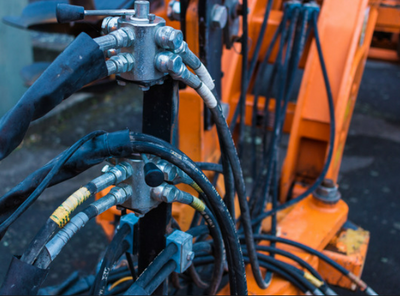
Hydraulic maintenance lowers ownership cost when measurements lead to timely decisions. A long checklist that produces no trend, threshold or work order only adds labor. Build a small set of reliable observations around the system’s likely failure mechanisms and connect each result to an action.
Fluid and hardware must be managed together. Contaminated or overheated oil damages components, while worn components can add heat and debris back into the fluid.
Define the costs that maintenance is intended to control
Record unplanned downtime, emergency labor, expedited freight, lost fluid, cleanup, repeat failures and damaged adjacent parts. Compare those costs with planned inspection, sampling and scheduled repair.
This makes priorities visible. A hard-to-access production line may justify permanent diagnostic points and stocked repair parts; a noncritical standby circuit may need a different interval. Avoid claiming one universal percentage saving.
Establish a repeatable condition baseline
Choose pressure, temperature, reservoir level, filter differential, noise and cycle-time observations that describe normal operation. Measure them at defined machine states so results from different days can be compared.
Oil analysis can follow cleanliness, water, viscosity and wear indicators appropriate to the equipment. Sampling technique matters: use a representative location, flush the sampling hardware as required, prevent dirt entry and record fluid hours and operating condition.
Design test access before a breakdown
Purpose-installed test ports let technicians connect compatible gauges, transducers or sampling equipment without repeatedly opening the main line. Their locations should answer diagnostic questions such as pump delivery pressure, pressure drop across a component or actuator-side behavior.
Select ports, hoses, adapters, caps and instruments for the fluid, maximum pressure, temperature and connection standard. A kit with many adapters is only useful if every component is identified and rated. Keep protective caps clean and do not treat a diagnostic coupling as a substitute for energy isolation.
Convert preventive findings into corrective work
During planned inspection, document leaking connections, damaged hose covers, loose supports, aeration, unusual heat, abnormal filter restriction and suspected cavitation. Set an action threshold and responsible owner for each result.
If a component is replaced earlier than expected, retain the evidence and identify the likely driver. Contamination, pressure transients, side load, unsuitable elastomer, bad routing or assembly error require different corrective actions. Replacing the same part without addressing the mechanism does not control future cost.
Use different cadences for different evidence
Operator walkarounds can catch new leakage, damaged lines, low fluid level and unusual sound. Scheduled technician checks can add temperature comparisons, support inspection, filter indicators and functional measurements. Laboratory analysis and deeper shutdown work may occur less frequently according to the OEM program and trend.
Where a system contains components from several manufacturers, reconcile their maintenance requirements in one controlled plan. Record exceptions rather than choosing the longest interval by convenience.
Keep fluids, filters, and reservoirs in the same diagnosis
An oil change will not correct dirt entering through a damaged breather, and a new filter will not remove the source of recurring water. Inspect storage and transfer containers, fill points, breathers, reservoir seals and maintenance tools as part of contamination control.
Review unusual color or odor as a prompt for investigation, not a stand-alone condemnation test. Aeration, oxidation, water and mixed fluids need different confirmation. Check reservoir turbulence, suction restrictions and return-line arrangement when foam or air is observed.
Filter decisions should use the required cleanliness target, element compatibility and recorded differential condition. Cutting open a removed element or submitting debris for analysis can sometimes show whether the dominant material comes from normal wear, an active component problem or outside contamination.
Temperature also needs context. Compare similar load and ambient conditions, then inspect coolers, relief flow, restrictions and component leakage if the trend rises. A hot spot identifies where to investigate; it does not by itself name the failed part.
Review whether the decision worked
After repair, verify the system in a controlled return to service and compare the condition readings with baseline. Close the work order with parts, measurements and cause classification. Then check whether recurring events, oil cleanliness and downtime actually improved.
The economic value comes from this loop: measure consistently, act before secondary damage, remove causes and use the results to refine the next interval.