
Confirm a 37-Degree JIC Connection with Four Independent Measurements
HGW Hydraulics on Sep 7th 2021
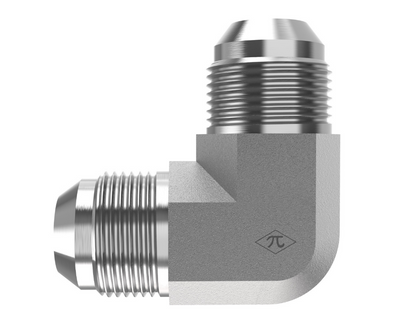
A thread diameter that matches a JIC chart does not prove the fitting is JIC. The replacement should agree in four areas: thread size, pitch, 37-degree sealing seat, and the complete end geometry. This prevents confusion with SAE 45-degree flare, ORB, straight-thread mechanical joints, or a damaged near-match.
1. Record the male thread diameter
Clean the threads and measure the male major diameter across intact crests with calipers. Avoid damaged lead threads and do not round the reading directly to a nominal hose size.
For a female end, the measurement method and accessible diameter can be less direct. Use the applicable identification chart, gauges, and a known mating sample or drawing rather than assuming a caliper reading is the thread’s nominal value.
Write down the raw decimal or millimeter measurement before converting it.
2. Match threads per inch
Place a pitch-gauge blade against several threads and look for full contact without light gaps. JIC commonly uses UN/UNF straight threads, but the exact diameter-pitch pair must match the chart.
Do not call threads per inch the linear distance between threads without converting units. TPI is a count; pitch is the reciprocal distance in inch-based notation.
Paint, plating damage, and deformation can make a blade appear to fit. Confirm more than one intact region.
3. Gauge the 37-degree seal
JIC seals at a 37-degree included flare surface measured according to its convention. Use a seat-angle gauge designed for hydraulic fittings. Check male cone and female seat for scratches, fretting, dents, uneven contact, or cracks.
A 45-degree flare can begin to assemble with some similar threads, but the mismatched angles create a narrow contact and damage. Visual inspection alone is unreliable.
Threads clamp the seats; they do not form the primary seal. Do not apply pipe sealant to a JIC flare to compensate for damage.
4. Identify dash size and body configuration
Dash notation often relates to tube or hose outside diameter in sixteenths of an inch for JIC connections, but exceptions and product conventions exist. Do not derive hose inside diameter or fitting bore from dash size without the product data.
Record male or female, swivel or fixed, straight/elbow/tee, bulkhead, adjustable orientation, tube or hose end, material, and the opposite connection. Two fittings can share a JIC end while serving very different installations.
Verify application and assembly
Match pressure-temperature rating, fluid, material and finish, tube or hose specification, seat condition, and manufacturer instruction. AN and JIC may share nominal 37-degree geometry in some contexts, but application, material, thread class, and qualification can differ.
Use a backup wrench and the specified tightening method. Align tube or hose before final assembly so tightening does not pull it into position.
Save measurements, photographs, and the verified part number in the equipment record. Four independent checks turn JIC identification from a visual guess into a repeatable replacement process.