
Protective Finishes on Hydraulic Fittings: From Surface Preparation to Service Life
HGW Hydraulics on Feb 20th 2024
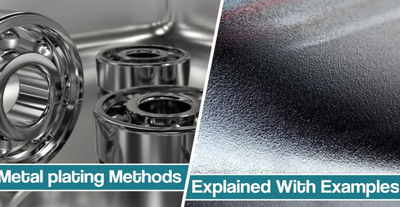
A plated hydraulic fitting is a layered component. The base alloy carries mechanical load, surface preparation creates adhesion, and the finish controls how the exterior responds to corrosion, wear, handling, appearance, or another required property. Selecting a coating by color alone ignores that system.
The useful specification connects substrate, process, coating material, thickness, conversion layer or sealer, dimensional limits, test method, and actual environment. A longer salt-spray result from another product cannot be copied to an unknown fitting.
Surface preparation decides whether the layer stays attached
Oil, oxide, scale, embedded particles, and poor activation can prevent a coating from bonding uniformly. Cleaning, rinsing, pickling, blasting, or other pretreatment depends on the base metal and process. Complex threads, bores, blind holes, and sharp edges can receive different current density or solution flow.
Hydrogen introduced during cleaning or electroplating can create embrittlement risk in susceptible high-strength steels. Applicable specifications may require controlled material hardness, baking, process timing, and verification. This concern should be addressed before choosing a finish solely for corrosion performance.
Threads and seal surfaces also need dimensional control. Excess buildup can change pitch diameter or prevent a flare, face, O-ring groove, or port from seating correctly.
Deposition methods solve different shape and volume problems
Electroplating uses electrical current to deposit metal from a solution. It supports many industrial finishes and high production volumes, but geometry and current distribution affect thickness.
Electroless plating relies on a chemical reduction reaction and can produce more uniform coverage on complex shapes. Bath control and deposition rate are important. Immersion deposition uses a displacement reaction and typically creates a thinner layer for suitable metal combinations.
Physical vapor deposition deposits material in a vacuum and can provide hard, thin coatings for selected applications. Equipment cost, line-of-sight effects, substrate temperature, and process qualification influence its use.
These labels do not establish environmental impact or quality by themselves. Chemistry handling, emissions, wastewater, worker protection, and regulatory compliance belong to the manufacturing process.
Coating metals offer different functions
Zinc and zinc-alloy systems are widely used to protect carbon steel through barrier and sacrificial behavior. Conversion coatings and sealers can change appearance and corrosion response. Nickel can provide a barrier layer, wear behavior, or a foundation for another deposit. Chromium systems may add hardness, wear resistance, or appearance but require chemistry-specific environmental and safety controls.
Copper is conductive and ductile and often serves as an intermediate layer, but it is not a universal exterior corrosion finish. Tin supports solderability in relevant components. Silver and gold serve high-conductivity, contact, or decorative functions where cost and tarnish behavior are considered.
The best finish is the one validated for the base metal, geometry, media exposure, external environment, and required life—not the most exotic name.
Substrate still determines the component
Carbon steel offers useful strength and manufacturing economy and is commonly zinc plated or otherwise protected. Aluminum may receive conversion coatings, anodizing, electroless nickel, or other systems designed for the alloy. Copper alloys and titanium require their own preparation and coating logic.
Stainless steel usually relies on its chromium-rich passive film rather than an exterior sacrificial coating. Cleaning and passivation can remove surface contamination and support corrosion resistance. Stainless can be coated for specialized purposes, but ordinary discoloration should not be treated by applying a random plating layer.
Material compatibility, galvanic contact, and the exposure at scratches or cut edges remain important after coating.
Corrosion and wear tests must match the specification
Salt-spray testing can compare a defined coating system under a defined method, but it is not a direct calendar-life prediction for a machine. Acceptance must state the substrate, pretreatment, coating, thickness, test standard, white- or red-corrosion criteria, sample geometry, and evaluation method.
Field conditions add abrasion, impacts, chemicals, road salt, moisture cycles, temperature, and crevices. A hard coating may resist wear but crack if the substrate flexes. A corrosion finish can be removed by a wrench at installation.
Receiving inspection can include appearance, coverage, thickness, adhesion, thread gauges, and documentation as required. Protect finished parts from mixed-metal contamination and moisture during storage.
Specify the finish without changing the fitting identity
Start with the correct connection standard, material strength, body shape, and pressure capability. Then add the approved surface finish and any process restrictions. For a replacement, keep the same seal geometry and verify that coating thickness has been accounted for in threads and mating surfaces.
Protective plating can extend service and improve consistency, but only as a controlled layer on a correctly designed fitting. The full process—from clean substrate to qualified inspection—matters more than the coating color or a single promotional test number.