
Distinguish NPT, BSPT, and BSPP Threads Before Selecting an Adapter
Sep 20th 2022
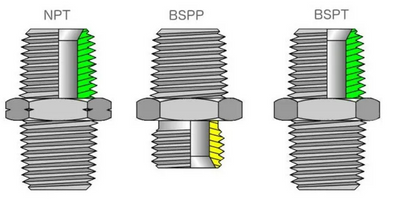
NPT and BSP are families of pipe threads, not interchangeable names for a connection that appears to be measured in inches. A field match must answer three questions: what thread form is present, whether it is tapered or parallel, and where the joint is designed to seal. Geography or equipment brand can guide the investigation, but geometry decides the part.
Separate the three common candidates
NPT is a tapered U.S. pipe thread with a 60-degree form. Its nominal size does not equal the measured outside diameter. Male and female threads develop increasing interference as they tighten, and an approved sealant is normally used to close the spiral leak path between the threads.
BSPT is a tapered British pipe thread using a 55-degree Whitworth form. It can also create thread interference, but that does not make it compatible with NPT. Differences in angle, crest and root shape, pitch at several sizes, and gauge dimensions prevent a controlled cross-standard connection.
BSPP is the parallel member of the British pipe family. Its straight thread normally retains the fitting while another feature makes the seal. Depending on the end design, that feature can be a bonded washer, captive seal, O-ring, metal face, or internal cone. A BSPP thread description therefore must be paired with the sealing style.
Use a field-identification sequence
Clean the disconnected part after the machine is isolated and depressurized. Old sealant, corrosion, damaged first threads, and plated buildup can distort measurements. Keep the mating component available because its spotface, chamfer, cone, washer seat, or O-ring location provides important evidence.
First check taper. Measure the male thread diameter near the first complete thread and again farther from the end, or use the appropriate parallel/taper and thread gauges. Do not decide from visual appearance alone, especially on a short thread.
Second measure pitch with a suitable gauge. Threads per inch can be shared by different families at some nominal sizes, so pitch is necessary but not sufficient. Confirm the profile with the correct 55-degree or 60-degree gauge when possible.
Third measure diameter and compare it with a recognized standard chart or component drawing. Pipe sizes are nominal, so a caliper reading should never be rounded into the nearest fraction and treated as the order size.
Finally inspect the seal. A shoulder with an elastomer or bonded washer indicates a different assembly from a thread-sealing taper. An internal 60-degree cone, for example, must mate with the proper seat rather than with a random BSPP male that happens to share the thread.
Do not use engagement as a compatibility test
An NPT male may enter some BSP ports for several turns. That partial engagement can be dangerously persuasive. It does not establish correct flank contact, thread length, mechanical retention, or sealing. Tightening farther can deform the threads, crack the port, or leave a connection that holds briefly and leaks under pressure or temperature cycling.
The same problem appears when a straight thread is treated like a taper and tightened in search of a seal. If the component was designed for a washer or cone, additional torque cannot create the missing sealing surface. Tape and paste cannot convert one standard into another.
When standards must meet, select a manufactured conversion adapter with one fully specified end for each side. The transition should be visible in drawings, bill of materials, and maintenance records so a later technician does not assume both ports are the same.
Apply sealant only where the design calls for it
For NPT or BSPT service, use a sealant approved for the fluid, temperature, component material, and system cleanliness requirement. Follow the sealant and equipment instructions for preparation, coverage, cure, and tightening. Keep excess material away from the first thread so fragments are less likely to enter the circuit.
PTFE tape is not automatically acceptable in every hydraulic, pneumatic, gas, oxygen, or process application. Paste is not universally safer. The responsible specification controls. A sealant should lubricate and seal as intended without encouraging excessive torque.
BSPP face, washer, O-ring, or cone seals normally require clean, undamaged mating surfaces and the correct sealing element. Applying pipe sealant to straight threads can conceal the real leak source and contaminate the system.
Select from service conditions, not regional stereotypes
NPT is common in North American industrial, hydraulic, pneumatic, plumbing, and process equipment. BSP connections appear widely in equipment originating in the United Kingdom, Europe, Asia, and other global markets. Modern machines can contain both because pumps, valves, cylinders, sensors, and attachments come from different suppliers.
Neither family is inherently the best choice for every liquid, gas, pressure, or maintenance situation. Suitability depends on the specific fitting rating, material, seal, temperature, media, vibration, assembly rules, and governing equipment standard. A straight-thread elastomeric seal may offer different service characteristics from a tapered-thread joint, but the complete design must be evaluated.
Material does not repair a standard mismatch. Stainless, brass, carbon steel, polymer, and aluminum fittings can all use pipe threads, but their allowable tightening, corrosion behavior, galling risk, and port strength differ. Confirm that the fitting material is compatible with the fluid and mating component, then use the assembly instruction for that material combination. Do not transfer a turn count or torque practice from a steel valve to a plastic housing.
Protect the port during installation
Inspect male and female threads for flattening, tearing, corrosion, and previous cross-threading. Check sealing faces for scratches and old gasket material. Start threads by hand only after identification; unexpected resistance is a stop signal, not a reason to use a longer wrench.
Tapered-thread engagement and torque vary with size, material, coating, port geometry, sealant, and manufacturer instructions. A universal instruction such as “snug plus one quarter turn” is not reliable for every hydraulic port. Over-tightening can split a casting or distort a valve body, while too little engagement can leak or lack retention.
For BSPP seals, make sure the washer, O-ring, or cone is positioned correctly and is made from a material compatible with the media and temperature. Hold adjustable fittings in orientation while following the specified assembly method rather than rotating connected hose into a twist.
Diagnose a leak without repeating the mismatch
A leaking pipe connection should be depressurized before inspection. Record the installed part, number of engaged turns where relevant, sealant, port material, and leak location. A spiral leak along threads suggests a different problem from seepage at a bonded washer or cone.
If mixed standards were forced together, replace damaged components rather than reinstalling the same combination with more sealant. Check the female port carefully; saving an inexpensive adapter while leaving distorted manifold threads can cause another failure.
For recurring equipment, create an identification record with photographs, nominal size, measured pitch and diameter, taper or parallel status, sealing style, material, and approved replacement part. Keep thread gauges and charts at the maintenance point, and train technicians to recognize when a nominal inch label still represents a different standard.
In a mixed fleet, map conversion points before a breakdown. A simple register can list the machine, component, port standard, adapter on each side, seal kit, and stocked replacement. Mark adapters that are meant to remain with a valve or attachment so they are not discarded during repair. Separate visually similar NPT, BSPT, and BSPP inventory with clear bin labels and protective caps.
When a new attachment arrives, verify every connection against drawings or gauges and update the record before it enters service. This is more reliable than expecting a technician to infer origin from paint color, equipment language, or the country where the replacement part was purchased.
That disciplined process makes NPT, BSPT, and BSPP manageable in a mixed fleet. It protects the port, reduces repeat leaks, and lets procurement order the exact connection instead of relying on a close-looking thread or a regional assumption.