
Match Hydraulic O-Ring Geometry and Compound to the Connection
HGW Hydraulics on Jun 11th 2024
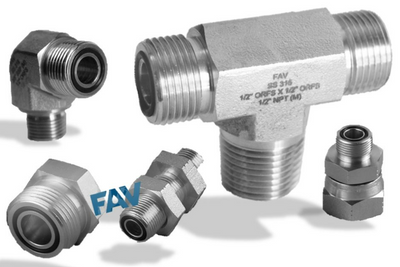
An O-ring part number is meaningful only with the connection geometry and material compound. ORB, ORFS, flange, quick-coupler, bonded, and specialty flare seals compress elastomer in different locations. Selecting a common size or a familiar rubber name without the groove and fluid data can create extrusion, swelling, cuts, or an incomplete seal.
ORB seals at a machined boss port
An SAE O-ring boss stud uses straight threads for retention and an O-ring near the port entrance. The female port provides the chamfer, spotface, and threads needed to support the seal. Fixed and adjustable stud ends use different tightening arrangements.
Identify port standard, dash size, groove, port depth, O-ring size and compound, backup washer, locknut, pressure, fluid, and temperature. The threads do not replace the O-ring, and thread sealant should not be used to hide a damaged spotface.
ORFS compresses an O-ring at the flat face
An O-ring face-seal male has a recessed groove in its face. The mating female face compresses the elastomer when the nut is tightened. The flat surfaces, groove, sleeve or tube end, and alignment all matter.
Inspect for radial scratches, corrosion, groove damage, a cut or extruded O-ring, and hose twist. Use the ORFS component standard and product data for size and rating. Do not assume a standard 90-durometer nitrile seal fits every fluid or temperature.
Flange seals depend on head, groove, clamps, and bolt load
Many four-bolt hydraulic flanges use an O-ring between the flange head and a flat port. Split clamp halves or a captive flange and bolts create load. Code 61, Code 62, and OEM patterns must be identified by dimensions and product requirements.
Use the specified groove and O-ring, clean the faces, align the line without force, and tighten bolts by the approved sequence. A larger line or higher pressure does not by itself define the flange seal material.
Quick couplings can contain several dynamic and static seals
Quick-connect halves may use O-rings around valves, poppets, sleeves, and mating noses. The correct seal kit is specific to manufacturer, series, size, pressure, fluid, and temperature. A visually similar coupling may use a different profile.
Internal seals can see sliding, repeated connection, trapped pressure, contamination, and decompression. Some couplers are field-serviceable; others require authorized rebuild or replacement. Follow the service manual instead of installing a loose O-ring from a general kit.
Bonded seals combine elastomer and metal support
A bonded washer uses an elastomer joined to a metal ring and can seal beneath a bolt head, plug, or port shoulder. British and metric arrangements can use different dimensions and profiles. Replace the complete bonded seal when its rubber, metal ring, or bond is damaged.
Do not stack washers or substitute a plain O-ring where the metal support controls compression. Inspect the mating face and use the specified orientation.
Specialty flare seals require responsible approval
Some products place an elastomeric or soft-metal conical seal on a 37-degree flare to address a specified connection or repair condition. These are not a universal way to salvage scratched JIC or AN hardware. The device, material, rating, and application must be approved, and seriously damaged seats should be replaced under the equipment procedure.
A conventional JIC flare is designed as a metal-to-metal connection. An added seal changes the interface and should not be presented as equivalent without documentation.
Select compound from exact chemical and thermal duty
NBR, HNBR, EPDM, FKM, silicone, polyurethane, FFKM, and other compounds have different behavior. Trade names do not identify every formulation. Petroleum oil, water-glycol, phosphate ester, fuel, steam, refrigerant, solvent, oxygen, food, or medical service can each impose special requirements.
Temperature range depends on compound, hardness, pressure, exposure time, and application. A catalog range for one material is not approval for every dynamic or static seal. Obtain the component and fluid manufacturer data and validate critical combinations when necessary.
Read failure evidence before changing hardness
Cuts point toward installation damage or sharp edges. Extrusion and nibbling can involve clearance, pressure, temperature, or backup support. Swelling, shrinkage, hardening, softening, and cracks can indicate chemical or thermal mismatch. Compression set needs interpretation with time and design.
Preserve the seal and inspect the groove, gap, mating face, pressure direction, and system events. A harder compound can reduce one symptom while increasing wear or failing to conform.
Stock seals by connection and controlled identity
Store O-rings and kits with material, size, cure or lot information, shelf controls, and connection use. Keep ORB, ORFS, flange, quick-coupler, bonded, and specialty seals separated. Protect from heat, light, ozone, moisture, deformation, and contamination according to the applicable storage guidance.
The correct replacement record names the connection, groove, seal size, compound, hardness where required, fluid, temperature, pressure, lubricant, and test. That makes an O-ring a controlled component of the hydraulic joint rather than a generic piece of rubber expected to seal anything that looks close.