
Manage O-Ring Sealed Hydraulic Connections from Selection through Storage
Nov 9th 2023
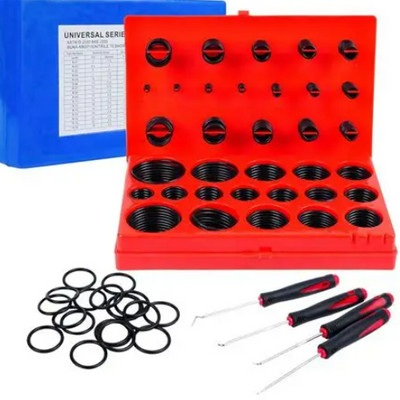
An O-ring can compensate for controlled surface and assembly variation, but it cannot correct the wrong groove, damaged port, incompatible elastomer or misaligned conductor. Reliability comes from managing the seal as a specified component throughout purchasing, storage and installation.
ORFS and ORB illustrate why the sealing location matters.
Distinguish the two common interfaces
ORFS places an O-ring in a groove at a flat face. A swivel nut clamps the mating flat against that seal. ORB uses a straight-thread stud and seals the O-ring in a machined boss port near the shoulder or chamfer.
Both use retaining threads that should not be treated as tapered thread seals. The correct O-ring, groove and mating surface are different, so one acronym cannot substitute for the other.
Specify geometry before compound
Record standard, size, cross-section, inside diameter, groove and mating surface. A seal that stretches onto the part can still have the wrong volume and be pinched or extruded when assembled.
Inspect grooves for burrs, corrosion and scratches. ORFS faces need flat, clean contact; ORB ports need an undamaged spotface/chamfer and correct adjustable-stud hardware when applicable.
Match elastomer to the full exposure
NBR is common with many petroleum hydraulic oils, while FKM, EPDM and other compounds serve different temperature and chemical envelopes. These are families, not universal choices.
Check fluid formulation, additives, water content, cleaning agents, external atmosphere and full temperature cycle. EPDM should not be casually substituted into petroleum-oil service, and FKM is not best for every low-temperature or chemical condition.
Hardness is also product-specific. Do not apply an aerospace durometer statement to all ORB ports or use color as material identification unless a controlled system defines it.
Preserve identity in storage
Keep seals in labeled packaging with compound, size, lot and shelf-life controls as required. Protect them from heat, sunlight, ozone sources, deformation, dirt, sharp edges and incompatible chemicals.
Use inventory rotation based on the applicable elastomer guidance. Humidity or room temperature alone does not determine serviceability; packaging, material and storage history matter together.
Assemble without damaging the seal
Clean hands, tools and parts. Inspect for cuts, flattening, swelling or twist. Apply only the compatible lubricant and preparation specified for the connection.
Align the parts so the O-ring is compressed rather than sheared. Use the product-specific torque or flats method under its defined dry or lubricated condition. Threads provide clamp load; extra torque cannot repair a cut seal.
Diagnose the failure mode
Extrusion can indicate clearance, pressure, groove or backup problems. Spiral or twist damage can point to assembly friction. Hardening, softening or swelling suggests temperature or chemistry. A clean cut may come from a burr or sharp port edge.
Record the observed condition before discarding the seal. Replacing only the O-ring without correcting the mechanism can repeat the leak.
O-ring fittings are serviceable because their sealing element is identifiable and replaceable. That advantage depends on keeping geometry, compound and assembly condition traceable from the stock bin to the machine.