
Build a Reliable ORB Port Around O-Ring Compression and Spotface Condition
Mar 7th 2023
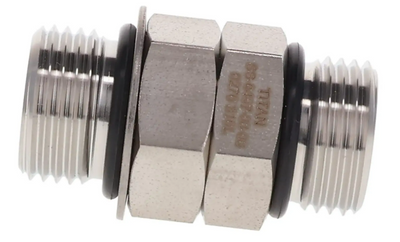
An SAE O-ring boss connection keeps thread retention and fluid sealing in different features. Straight threads hold the male fitting in the port, while an elastomer is compressed at the port entrance. Reliable service depends on the O-ring, groove, chamfer, spotface, fitting position, and thread engagement working together.
Read the port anatomy before selecting the adapter
The male ORB end has Unified straight threads and a controlled location for the O-ring. The female boss port provides matching threads plus an entrance geometry that supports and compresses the seal. SAE J1926 is commonly associated with these ports and stud ends.
Identify nominal dash size, thread diameter and pitch, port depth, and sealing detail. Similar straight threads can appear on JIC or other connections, but a JIC female provides a flare seat rather than an ORB port. The presence and location of the sealing feature resolves the identity.
Select the O-ring from the service environment
Size alone is not enough. Elastomer material must suit the hydraulic fluid or process media, continuous and transient temperature, pressure, decompression behavior where relevant, and external chemicals. An O-ring that looks new can swell, harden, shrink, crack, or extrude if the material is wrong.
Use the specified seal and any backup ring required by the fitting design. Do not stack O-rings or substitute a nearby cross-section to compensate for a damaged port. Protect seals from dirt, sharp threads, and cuts during installation, and use only approved assembly lubricant.
Control fixed and adjustable stud ends correctly
A fixed ORB end is tightened according to its design. An adjustable elbow or tee commonly uses a locknut and backup washer arrangement so the body can be oriented without forcing another full thread turn. The exact installation sequence and torque must follow the component instructions.
Over-tightening can damage the seal, washer, threads, or port. Too little engagement can leave inadequate retention or compression. Fitting length also matters; a lookalike end that bottoms internally before the O-ring is loaded will not become correct through extra torque.
Decide what can be reused
One advantage of a straight-thread O-ring port is that it can often be serviced without repeatedly wedging tapered threads. That does not make every part indefinitely reusable. Inspect threads, groove, washer, locknut, spotface, chamfer, corrosion, and body deformation each time.
Replace the O-ring under the maintenance specification rather than reinstalling a flattened or cut seal. If the spotface is scratched or the port entrance is corroded, a new elastomer may still leak. Repair of the component should follow its approved dimensional procedure.
Diagnose leaks by their location
Leakage at the port face may indicate a missing, damaged, incompatible, or poorly compressed O-ring. Movement of an adjustable body can indicate locknut or installation issues. Oil appearing above the connection may travel from another source, so clean and observe the joint after safe depressurization.
ORB is widely used on pumps, valves, manifolds, cylinders, and adapters because it provides a compact serviceable port. It can convert to JIC, NPT, BSP, metric, flange, or other ends through a properly manufactured adapter. Specify both ends independently, including rating and seal material, so the reliable O-ring boss does not conceal a mismatch on the other side.