
Pipe Fitting Identification: Shape, Thread, Nominal Size, and Schedule
Sep 28th 2022
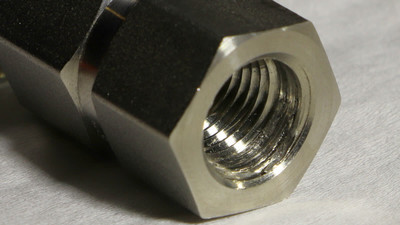
Identifying a pipe fitting requires two different kinds of information. Its body shape explains what it does in the line: join two sections, change direction, split flow, or transition between sizes. Its connection details explain what it can actually mate with: thread form, nominal size, schedule or wall relationship, sealing method, and material.
Stopping after the first step creates wrong orders. Two elbows may both turn flow 90 degrees while using different threads and materials. Two threaded adapters may share a similar outside diameter but use NPT and BSP forms that do not have the same angle or pitch. A complete identification records function and connection separately.
Read the fitting body as a flow diagram
A coupling joins two line sections on the same axis. A standard threaded coupling normally receives a male pipe end at each side. Repair and slip designs serve different installation methods, while compression-style couplings use their own seals and hardware. Those subtypes are not interchangeable simply because the body is straight.
An elbow changes direction. Common 45-degree and 90-degree bodies can reduce routing space or move a line around equipment. The angle does not specify the connection; an elbow may be threaded, socket-weld, butt-weld, flanged, or use another end system. Record both ends because a street elbow or adapter elbow can have different connection types on opposite sides.
A tee creates a branch or combines flow paths. An equal tee has the same nominal size at all three openings. A reducing tee changes size at the branch or run. Orientation matters when describing which opening is reduced, especially for replacement parts and piping drawings.
A reducer transitions from one pipe size to another. A concentric reducer keeps the centerlines aligned. An eccentric reducer offsets one side, which can help manage drainage, pump suction layout, or air and vapor pockets when the piping design calls for that orientation. The correct choice comes from the system layout rather than price or availability.
Determine whether the connection is threaded, welded, or sealed another way
For a threaded fitting, identify male or female ends first. External threads are male; internal threads are female. Then inspect whether the thread is tapered or parallel and locate the actual sealing surface.
NPT is a tapered U.S. pipe thread standardized in ASME B1.20.1. Many NPT joints seal through thread interference together with an appropriate sealant procedure. BSP includes parallel and tapered forms used internationally. NPT and BSP can look close in some sizes, but their thread geometry and pitch combinations differ. They should not be forced together.
Parallel threads may seal at a washer, O-ring, cone, or other face rather than along the thread. Measuring only the threaded diameter misses that information. Photograph the end view and profile so a bonded washer seat or internal cone is not hidden in the identification record.
Welded fittings require a different inspection. ASME B16.9 covers dimensional requirements for factory-made wrought butt-welding fittings, while ASME B16.11 addresses forged socket-welding and threaded fittings. End preparation, material grade, schedule compatibility, welding procedure, and examination replace thread pitch as the controlling details.
Measure threads without treating the caliper reading as pipe size
Measure the largest practical outside diameter of a male thread and the applicable internal dimension of a female thread. Use a thread-pitch gauge to determine threads per inch or metric pitch. Check taper over a suitable length rather than deciding from one diameter.
A circumference measurement divided by pi can provide a rough outside-diameter estimate when a caliper is unavailable, but it is not a final thread-identification method. String thickness, thread crests, and access can introduce enough error to confuse adjacent sizes. A pitch gauge, caliper, and verified thread chart are much more dependable.
Engagement length and overall body dimensions can distinguish fittings that otherwise share a connection. Record wrench flats, branch centerline dimensions, reducer orientation, and the depth available in the mating component when space is limited.
Nominal pipe size is a name, not the measured diameter
Nominal Pipe Size, or NPS, organizes pipe and fitting sizes but does not equal the actual outside or inside diameter in most common sizes. Match the measured thread to an NPT or other applicable table instead of expecting a “one-inch” thread to measure exactly one inch.
Pipe schedule describes wall thickness for a given nominal size. Changing from Schedule 40 to Schedule 80 generally reduces the pipe inside diameter because the outside diameter remains tied to the nominal pipe system. The thicker wall may support a different pressure capability, but material, temperature, joint design, corrosion allowance, and governing code also matter.
Threaded fittings are commonly specified by nominal connection size rather than by the pipe bore. Butt-weld fitting ends must match the pipe outside diameter and appropriate wall preparation. A complete material list therefore records nominal size, schedule or wall, material specification, and end type together.
Material selection follows the media and environment
Carbon steel, stainless steel, brass, plastics, and other materials serve different fluids and operating conditions. Stainless steel may be chosen for corrosion resistance, but the alloy grade and process environment still require review. Brass can be suitable for many water, air, and compatible-fluid applications, but it is not a universal answer for hydraulic or chemical service.
External corrosion, washdown, salt exposure, temperature, and dissimilar-metal contact can be as important as the media inside the pipe. The sealant, gasket, or O-ring must also be compatible. A correct thread in the wrong material is still an incorrect fitting.
Build a repeatable identification record
For a replacement, record body type, angle or branch arrangement, male and female ends, thread diameter and pitch, taper or parallel form, sealing method, nominal size, schedule relationship, material, and key dimensions. Compare that information with the drawing, component port, and governing standard.
This method prevents a common shortcut: ordering a “90-degree one-inch fitting” when the system actually needs a specific material, schedule, thread, and sealing arrangement. Shape narrows the search; measured connection data completes it.