
Replace ORFS, ORB, and Quick-Coupler O-Rings Without Damaging the Seal Land
HGW Hydraulics on Mar 6th 2024
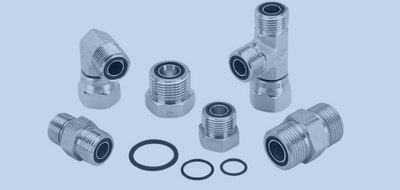
Replacing an O-ring is a precision maintenance task. The inexpensive seal sits against a groove, face, chamfer, bore, or backup component that may cost much more. Scratching that hard surface or installing a nearby size can turn a routine repair into a recurring leak.
Confirm the connection before removing the seal
ORFS, ORB, and hydraulic quick couplings all use elastomers, but the seal locations and service procedures differ. ORFS places an O-ring on the male face to seal against a mating flat surface. ORB uses an O-ring at a straight-thread boss port. A quick coupling can contain several internal seals around valves, poppets, sleeves, and mating noses.
Identify manufacturer, series, size, seal-kit part number, fluid, pressure, and temperature. Quick couplings that look alike may use different profiles and internal components. Do not order a seal only from measured outside diameter after it has swollen or flattened in service.
Isolate stored energy and clean the exterior
Follow the equipment’s energy-control procedure. Depressurize both sides, lower or support loads, and account for trapped pressure and temperature. Some quick couplings retain pressure in a disconnected half.
Clean around the connection before opening it so grit does not enter the port or groove. Cap exposed hoses and components with clean closures. Wear protection appropriate to the fluid and task, and never check a suspected hydraulic leak with a hand.
Remove the old O-ring without scoring the metal
Use a plastic, brass, or other non-damaging tool approved for the component. Avoid sharp scratch awls, screwdrivers, or picks that can gouge the groove or sealing face. If a metal service tool is specified for a deep coupling, control its tip and angle carefully.
Do not cut toward a surface that must seal. Remove backup rings and retainers in their documented order. On an ORB stud, protect the new and old seal from sharp thread crests during removal and installation, using a sleeve or method supplied for the fitting when required.
Inspect the failed seal and its land
Cuts can point to installation damage. Extruded or nibbled edges can involve excessive clearance, pressure, temperature, or missing backup support. Swelling, stickiness, hardening, cracks, or shrinkage may indicate fluid or temperature incompatibility. Flattening alone needs interpretation with age and design.
Inspect the ORFS face and groove, ORB groove, chamfer and spotface, or quick-coupler bore and valve parts for scratches, corrosion, burrs, deformation, and contamination. A new O-ring cannot restore a damaged land. Preserve evidence when the cause is not clear.
Install the exact clean seal
Verify material compound, size, lot or documentation where required, and shelf condition. Clean the groove and seal with approved materials. Use only the assembly lubricant permitted by the seal and component manufacturer for the system fluid; silicone grease, hydraulic oil, or general hose lubricant is not universally compatible.
Place the O-ring without twisting, rolling, cutting, or stretching it more than the procedure allows. Make sure it sits evenly and any backup rings face the correct direction. Do not stack seals or use thread sealant to compensate for a wrong cross-section.
Apply the connection-specific assembly method
For ORFS, align clean faces and tighten by the product instruction without dragging the hose into twist. For ORB, follow the fixed or adjustable stud-end procedure and verify locknut and washer arrangement. For a quick coupling, follow the service manual for internal seal replacement and valve reassembly; some couplers are not intended for field rebuild.
Check mating noses, locking balls or segments, sleeves, dust caps, and valve movement. A damaged mating half can cut the new seal immediately.
Test and record the repair
Reconnect under clean conditions, restore energy from a protected position, and use the specified functional or leakage test. Cycle a quick coupling as required and observe both connected and disconnected sealing behavior without exposing workers to pressure.
Record component series, seal kit and compound, failure evidence, land condition, lubricant, technician, and test result. Planned replacement intervals should come from the equipment program and observed duty rather than a universal schedule. A reliable O-ring repair protects the seal land, corrects the underlying cause, and proves the complete connection before return to service.