
Corrosion Review for Brass and Stainless Hydraulic Fittings
HGW Hydraulics on Jul 31st 2024
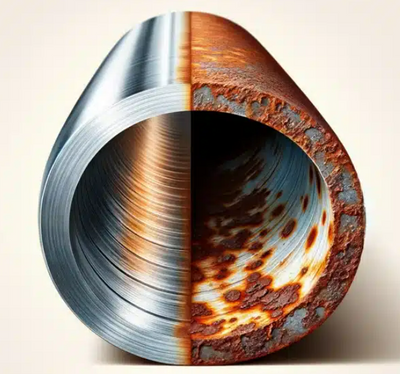
Calling brass and stainless “rust-resistant” is useful only as a first distinction from unprotected carbon steel. Brass does not produce iron oxide, but it can lose zinc or crack. Stainless forms a passive chromium oxide film, but it can pit or corrode in crevices. A reliable hydraulic material review names the actual degradation mechanism.
That review should cover conveyed fluid, external environment, deposits, temperature, cleaning, stress, dissimilar metals, and the geometry where moisture can remain.
Brass failure can begin without red rust
Brass is primarily a copper-zinc alloy, with different grades tailored through additional elements and composition control. In susceptible combinations of water chemistry and temperature, zinc can selectively leach from the material. The remaining porous copper-rich structure loses useful strength even though it does not resemble ordinary steel rust.
Some brasses are formulated for improved dezincification resistance. Other environments can promote stress-corrosion cracking, erosion-corrosion, ammonia-related attack, or general corrosion. Verify grade and compatibility instead of assuming all brass behaves alike around water or steam.
Lead-free and potable-water rules may affect allowable composition independently of hydraulic performance.
Stainless depends on a stable passive film
Chromium in stainless steel reacts with oxygen to create a thin protective surface. This layer can reform after minor damage under favorable conditions. Carbon-steel contamination, scale, heat tint, deposits, and oxygen-starved crevices can interfere with that protection.
304 provides broad general corrosion resistance. Molybdenum in 316 improves resistance to pitting and crevice attack in many chloride conditions. Neither grade is immune to seawater, deicing salts, hot chlorides, acids, or stagnant deposits.
Cleaning and passivation may remove free iron and support the surface after fabrication. They do not convert the wrong grade into a resistant one.
Mixed metals can create a new corrosion cell
Brass and stainless may be used in the same system when the design supports it, but electrical contact in a conductive liquid can create galvanic current. The less noble material can corrode faster. Risk depends on electrolyte, exposed area ratio, temperature, potential difference, coatings, and whether the joint stays wet.
Thread sealant is not a universal galvanic isolator. If isolation is required, specify materials, insulating components, drainage, coating, and inspection as a complete strategy.
The same review applies where either alloy contacts aluminum, carbon steel, zinc-plated parts, or other metals.
Hydraulic geometry traps real environments
Threads, washers, clamps, hose ferrules, and mounting surfaces can hold salts and cleaning fluid. An exterior washdown may be more aggressive than the hydraulic oil inside. Road spray and coastal deposits concentrate as water evaporates.
Crevices also make visual inspection difficult. Remove guards under the safe procedure and inspect hidden interfaces, not just exposed wrench flats. Rust staining on stainless may come from nearby carbon steel particles rather than bulk failure, but its source still needs investigation.
Material affects assembly and maintenance
Brass is relatively soft and can deform when overtightened. Stainless can gall and seize. Damage at a JIC flare, ORFS face, ORB chamfer, pipe thread, or valve seat can create a leak that is unrelated to corrosion.
Use the specified tightening method and compatible seal or compound. Avoid cleaning chemicals that attack the fitting or O-ring. Cap parts during storage and segregate stainless fabrication tools from carbon-steel grinding debris where required.
Select from evidence and verify the replacement
Record the alloy grade, media composition, temperature, external exposure, cleaning procedure, connection, pressure condition, and observed damage. A pink or porous brass surface can suggest dezincification; localized pits on stainless point to another mechanism. Laboratory analysis may be necessary when the consequence is high.
Then compare candidate alloys with current compatibility data and applicable codes. A dezincification-resistant brass, 316 stainless, more highly alloyed stainless, nickel alloy, polymer, or protected carbon steel may be appropriate depending on the mechanism.
Brass and stainless extend service only when their corrosion systems fit the environment. Naming the mechanism turns a general preference into a defensible material and maintenance decision.