
Specify Sanitary Clamp Connections for Cleanability, Not Appearance
HGW Hydraulics on Jul 14th 2021
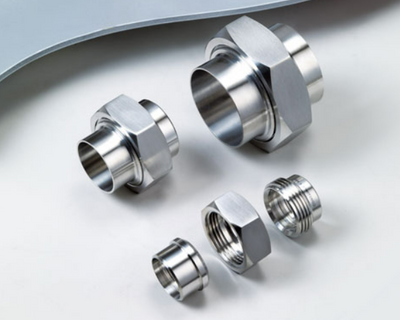
Sanitary fittings are product-contact components designed within a hygienic process system. Stainless material and a polished surface are useful, but cleanability also depends on joint geometry, welds, gaskets, slope, drainage and the validated cleaning method.
Define the hygienic boundary
Food, beverage, pharmaceutical, personal-care and biotechnology equipment can require removable joints with low hold-up and accessible product surfaces. Determine whether the connection is direct product contact, clean utility or nonproduct service because requirements differ.
Avoid pockets, misaligned bores and protruding gaskets that trap residue. A connection can hold pressure and still be unacceptable for cleaning.
Put surface finish on the purchase description
Roughness average, often expressed as Ra, characterizes surface-height variation under a defined measurement method. Required value and units come from the customer, applicable standard and process validation; “20 Ra for pharma and 30 Ra for food” is not a universal rule.
Specify mechanical polish, electropolish or other treatment where required, along with directionality, weld finish, inspection and documentation. Handling damage after polishing can change the product-contact surface.
Understand the clamp-style assembly
A typical sanitary clamp connection brings two matching ferrule faces together with a shaped gasket and external clamp. The gasket creates the seal while the clamp applies load. Tri-Clamp or Tri-Clover terminology may be used in the market, but the actual ferrule dimensions and standard control compatibility.
Clamp construction can support rapid disassembly. It does not by itself prove that a system is suitable for clean-in-place operation. Spray coverage, flow regime, temperature, chemistry, time and drainage determine cleaning performance.
Match gasket to product and cleaning cycles
Select elastomer or polymer formulation for product, steam or hot-water exposure, cleaning chemicals, temperature, pressure and regulatory needs. Color is not a compound certificate.
Inspect for swelling, hardening, cuts and compression change. An oversized, wrong-profile or overcompressed gasket can intrude into the bore and trap product. Replace it under the plant’s hygienic maintenance procedure.
Assemble without using the clamp to correct pipe alignment
Ferrule faces should meet parallel and centered. Pipe strain or a misaligned weld can load the joint unevenly. Inspect clamp hinge, threads and contact surfaces; tighten only by the approved method.
Pressure rating depends on clamp, ferrule, gasket, size, temperature and service. Sanitary appearance does not authorize the connection for hydraulic pressure.
Preserve traceability and cleaning evidence
Record material grade, heat or lot where required, ferrule standard and size, tube wall, finish, gasket, clamp and certificate package. During replacement, inspect nearby welds and installed slope.
The correct sanitary fitting is one that can be repeatedly cleaned and verified inside the complete process. A polished clamp joint is only one part of that hygienic control.