
Choose Stainless Hydraulic Fittings for the Exposure, Not the Label
Jul 2nd 2026
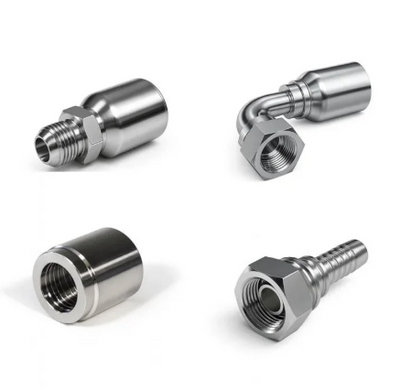
Stainless steel can be an excellent material for a hose fitting or adapter, but “stainless” is not a complete specification. Grade, manufacturing condition, connection design, pressure-temperature rating, fluid, external exposure, and mating materials all determine whether it is the right choice.
The decision should compare the actual failure mechanism with available materials rather than assume stainless is always the premium answer.
Start with internal and external corrosion separately
The process fluid contacts the bore and sealing surfaces. The external environment contacts wrench flats, threads, crevices, clamps, and nearby structure. Seawater spray, fertilizer, washdown chemistry, mine water, road salt, and indoor humidity create different corrosion conditions.
Type 316 stainless is often selected for improved resistance in many chloride-containing environments because molybdenum contributes to pitting and crevice-corrosion resistance. It is not immune to chlorides, and its advantage is not simply “more chromium” than every other grade. Concentration, temperature, oxygen, deposits, and crevice geometry matter.
Review both sides of the fitting and the cleaning process. A compatible internal fluid does not protect an exposed thread from external salt.
Pressure cycles require a qualified component, not a material assumption
Stainless steel does not automatically give a fitting a higher pressure rating or prevent microcracks. Rating depends on alloy condition, dimensions, threads, forging or machining process, heat treatment, surface condition, seal, temperature, and test basis.
Compare the published rating for the exact fitting and connection. Ensure the hose, tube, port, seal, and adapter all support the operating pressure and transients. The lowest qualified part controls the assembly.
Temperature cycling also changes seal behavior and joint loading. Select the O-ring, hose, and lubricant with the same care as the metal body.
Cleaning and sanitary service need more than stainless chemistry
Food, beverage, pharmaceutical, laboratory, and clean-process systems may require corrosion-resistant, cleanable materials. Stainless is common because suitable grades can tolerate many cleaning processes and can be finished to controlled surfaces.
However, base material alone does not make a fitting sterile, hygienic, food-contact compliant, or clean-in-place capable. Internal geometry, dead legs, surface finish, weld quality, elastomers, documentation, and the facility’s validation requirements all matter.
Many hydraulic fittings are outside the product-contact zone and serve a separate power circuit. Do not apply a sanitary claim merely because the equipment is installed in a food plant.
HVAC and refrigeration are application-specific
HVAC and refrigeration systems use copper, steel, stainless steel, aluminum, brass, polymers, and other materials according to refrigerant, pressure, temperature, code, joining method, corrosion exposure, and equipment design. Stainless fittings are not universal in these systems and are not selected primarily to improve heat exchange at a connection.
They may be appropriate in corrosive environments, high-pressure sections, industrial process cooling, or where compatible stainless tubing and equipment are specified. Confirm refrigerant and oil compatibility, cleanliness, pressure-temperature rating, and applicable code before substituting material.
Galvanic and crevice conditions can defeat a good alloy
Connecting stainless to carbon steel, aluminum, or another metal in a conductive environment can create galvanic conditions. Area ratio, electrolyte, isolation, coating, and drainage influence severity. Water trapped beneath a clamp or thread seal can promote crevice attack even when open surfaces look clean.
Design for drainage and inspection. Use compatible isolation or coating systems where engineering requires them, and avoid field changes that introduce an unreviewed material pair.
Installation practices differ from plated steel
Stainless threads can gall when similar materials slide under high contact pressure. Start threads by hand, maintain alignment, turn slowly, and use only an approved lubricant or anti-seize compound with a torque instruction for that condition.
Do not transfer a dry plated-steel torque value to lubricated stainless. Inspect for metal transfer or rising irregular resistance and stop before the parts seize.
Use clean tools when surface contamination matters. Embedded carbon-steel particles can rust on a stainless surface and be mistaken for failure of the base alloy.
Compare total service cost
Stainless may reduce coating damage, repainting, and corrosion replacements in a severe environment. It may also cost more, require controlled assembly, and be unnecessary in a clean indoor hydraulic circuit. Plated carbon steel, brass, or another alloy may be a better fit when pressure, fluid, environment, and code allow it.
For recurring purchases, record the reason for material selection, exact grade, seal, connection, drawing revision, and approved alternatives. Stock common stainless and plated parts separately so appearance does not drive substitution.
Stainless hose fittings and adapters make sense when their documented alloy and component rating address a known exposure or process requirement. The word “stainless” should begin the verification, not end it.