
Divide a Hydraulic Circuit into Rigid Tube Zones and Flexible Hose Zones
Mar 30th 2023
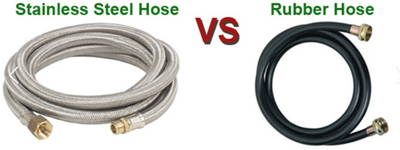
Most hydraulic systems do not need a winner between stainless tube and hose. They need boundaries: rigid lines where geometry should remain fixed, flexible assemblies where components move or vibration must be isolated, and controlled transitions between the two. That zone-based approach is more useful than assigning the entire circuit to one material.
Locate every source of relative movement
Mark engine or pump vibration, cylinder travel, articulated joints, removable attachments, service access, thermal movement, and frame deflection. Hose can accommodate planned relative motion when routed within its bend and torsion limits. Rigid tube should not bridge two components that move independently unless the design accounts for the resulting stress.
Use hose near moving actuators and at strategic vibration-isolation points. Use formed tube along stable frames, manifolds, and protected machine structures. The transition location should be supported so tube weight and hose movement do not load the fitting.
Compare routing space with real bend limits
Hose is flexible, but it cannot be folded into any radius. Check minimum bend radius, straight length at the coupling, pressure movement, clamps, and abrasion clearance. A flexible line may require a larger sweeping bend than a properly formed small-diameter tube.
Stainless tube needs appropriate bending equipment, bend radius, wall thickness, and allowance for springback and flattening. Tight routing can be repeatable in production when the tube is formed from a controlled drawing. Field changes are less forgiving and may require new tube, tools, and skilled preparation.
Decide how much compliance the circuit can tolerate
Hose expands and changes length under pressure to a degree determined by its construction. That compliance can help isolate vibration but can also affect actuator response, fluid volume, and position control. Rigid metallic tube generally changes volume less under the same hydraulic event and can support precise, repeatable plumbing.
Neither option eliminates pressure surge. Valves, accumulators, line sizing, supports, and machine control influence transient behavior. Do not use a rigid line or high-pressure hose as a substitute for diagnosing an uncontrolled spike.
Evaluate different aging and failure modes
Hose can age through heat, fluid incompatibility, ozone, UV, abrasion, impulse, flex fatigue, and end-loading. Inspection looks for cracks, hardening, blisters, exposed reinforcement, leakage, kinks, and coupling movement.
Stainless tube can suffer vibration fatigue, fretting at supports, dents, work damage, pitting, crevice corrosion, and stress at poor bends or welded areas. Stainless grade must suit chlorides, chemicals, temperature, and fabrication. It is corrosion resistant, not corrosion proof.
Match the fluid and connections across the whole path
For hose, verify tube and cover compounds, reinforcement, pressure, temperature, vacuum, and qualified ends. For tube, verify alloy, outside diameter, wall, temper, surface condition, pressure design, bend and joining method. O-rings, ferrules, weld fittings, flare seats, and adapters can control compatibility even when the main line material is correct.
Avoid unnecessary chains of adapters at a tube-to-hose transition. Specify the port standard and sealing method at both sides, support the connection, and maintain wrench access without forcing the line out of alignment.
Compare service strategy and total cost
Hose assemblies can be replaced quickly and prepared off the machine, but they need controlled inspection and age or condition management. Formed tube can deliver long service in a protected fixed zone, while an unplanned replacement may take more measurement and fabrication time.
For each zone, compare installation labor, tooling, supports, spare strategy, inspection access, downtime, cleanliness, and recurring failure history. A sound circuit often uses stainless tube for stable distribution and hose for the final moving connection. The right boundary reduces fatigue and service work without making unsupported assumptions about a universal 30-year life for either component.