
Choose Brass or Stainless Fittings from the Actual Failure Environment
HGW Hydraulics on Oct 24th 2024
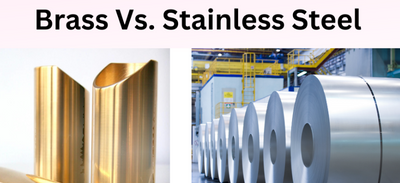
Brass and stainless steel are alloy families, not single performance grades. A material decision should name the exact alloy and then connect it to fluid chemistry, external exposure, pressure, temperature, cleaning method and the consequence of a leak.
Brass may be the efficient choice for a controlled utility line. Stainless may earn its added fabrication cost in a corrosive or cleanliness-sensitive zone. Neither conclusion can be made from color or purchase price alone.
Start with the corrosion mechanism
Stainless steel relies on a chromium-rich passive surface. 304 is widely used for general service, while 316 often provides better resistance to localized chloride attack because of its molybdenum content. Salt deposits, warm chlorides, crevices and unsuitable cleaning chemicals can still damage stainless.
Brass is primarily copper and zinc, with properties that vary by composition and processing. Certain waters can selectively remove zinc from susceptible brass, leaving a weakened porous structure. A dezincification-resistant grade may be required under the governing plumbing or customer specification.
Ask whether the threat is internal water chemistry, salt spray, chemical contact, washdown, buried moisture, galvanic coupling or some combination. The appropriate alloy for one side of a wall may be unnecessary on the protected side.
Use the finished fitting rating, not a material ranking
Stainless alloys can provide high strength, but a fitting rating comes from its size, geometry, manufacturing route, material condition, temperature and connection standard. A stainless part is not automatically rated above every brass part.
Brass is used successfully in many water, air, pneumatic and instrument applications. Hydraulic shock, vibration or cyclic loading may move a design toward steel or stainless, but the choice must still be checked against the published rating of the complete assembly.
Account for fabrication and field behavior
Brass generally machines readily and can reduce manufacturing effort for complex small parts. Its relative softness also means installers must protect threads, seats and hexes from excess force.
Stainless requires tooling and process control to hold sealing surfaces and threads. Similar stainless mating threads can gall if surface condition, lubricant, speed or assembly practice is wrong. The lubricant must also be compatible with the fluid and cleanliness requirements.
Thermal and electrical conductivity differ between the alloy families, but those properties should be calculated where they matter. Do not infer grounding, thermal isolation or fire behavior from the fitting material without reviewing the complete installation.
Apply hygiene and regulatory requirements precisely
Food, pharmaceutical and potable-water service is not approved by the word “stainless.” Grade, surface finish, product listing, extractables, cleanability, joint design and process-specific regulations may all apply. Brass products likewise may need lead-content, alloy or listing controls for drinking-water installations.
For a sanitary line, examine crevices and cleaning access as carefully as alloy. A compliant material in a poorly drained or uncleanable connection can remain the wrong design.
Check interfaces instead of judging one fitting alone
A brass fitting installed in an aluminum, copper or stainless assembly becomes part of an electrochemical and mechanical system. Review electrical contact, electrolyte exposure, area ratios and isolation details when galvanic corrosion is plausible. Also check whether the connected tube or port is hard enough to damage a softer seat during repeated service.
Seal material may decide the result before the body alloy does. Water additives, fuel, refrigerant, compressed-air oil and process chemicals can swell or harden an incompatible O-ring. Confirm the elastomer and any thread sealant separately from the metal choice.
Inspection plans should match the likely mechanism. Look for pink or porous areas on susceptible brass, deposits and hidden internal restriction, or pitting and crevice attack on stainless. Evidence from a removed part and fluid analysis is more useful than replacing every yellow or silver fitting by appearance.
Compare lifecycle cost by zone
Initial unit price is only one cost. Include inspection, planned replacement, access labor, flushing, lost production and the effect of a leak on adjacent equipment. Stainless may be justified at washdown skids, coastal exposure or chemical injection points while brass remains appropriate in a dry protected utility cabinet.
Avoid unsupported promises such as a fixed lifetime or a guaranteed maintenance percentage. Record why the alloy was selected, what deterioration to inspect and what evidence would trigger a material change. That makes the decision repeatable when the system expands or its water chemistry changes.