
Stainless Pipe vs Tube: Ordering Language, Dimensions, and Applications
Jan 11th 2023
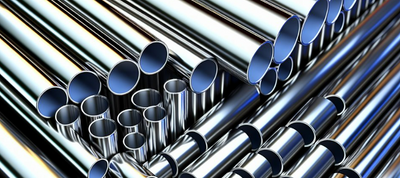
Stainless pipe and stainless tube can come from similar alloys and manufacturing routes, but they are ordered through different dimensional systems. Pipe is commonly specified by Nominal Pipe Size and schedule. Tube is commonly specified by actual outside diameter and wall thickness. That language determines which fittings, calculations, and tolerances apply.
The difference is not simply that pipe carries fluid while tube provides structure. Stainless tube also carries hydraulic, instrumentation, process, sanitary, and heat-exchanger fluids. Pipe can serve structural purposes. The drawing and product standard establish the intended use.
Pipe uses a nominal size system
NPS is a standardized designation rather than a direct measurement of bore. For each nominal size, applicable standards define outside diameter and schedule-related wall thickness. Changing schedule generally changes the inside diameter while the standardized outside diameter remains associated with the nominal size.
Flow calculations use the actual resulting bore, roughness, length, fittings, and fluid properties. Pressure design also considers material, wall, temperature, corrosion allowance, joining method, and code—not schedule alone.
Pipe fittings are selected through the same nominal system and the required end type, such as threaded, socket-weld, butt-weld, or flanged.
Tube is ordered from actual outside dimensions
Tube is normally described by outside diameter and wall thickness, such as a specified OD with a stated wall. Those dimensions determine bore and interface with compression, flare, bite-type, or welded tube fittings.
Tighter OD, wall, straightness, or surface-finish tolerances may be required for instrumentation, hydraulic, sanitary, heat-exchanger, and structural tube. The exact tolerance comes from the governing tube specification, not from the word “tube” alone.
Tube can be round, square, rectangular, oval, or another shape for structural and fabricated products. Fluid-pressure tube is commonly round because its geometry distributes internal pressure efficiently and matches standard fittings.
Both can be seamless or welded
Seamless and welded products are available in pipe and tube forms. Welded material is formed from strip or plate and joined along a seam; seamless material is produced without a longitudinal weld. Heat treatment, sizing, cold work, finishing, and examination vary with the standard.
One route is not universally stronger, cleaner, or less expensive. Alloy, dimensions, production volume, specification, weld quality, and required testing determine suitability and cost.
Alloy follows corrosion and fabrication requirements
304 and 316 are common stainless families, but grade selection depends on media, chlorides, temperature, cleaning, exterior exposure, welding, and corrosion mechanism. Sanitary work may add surface-finish and cleanability requirements; hydraulic tube may emphasize pressure, bending, and fitting compatibility; structural tube may emphasize section properties and appearance.
Before ordering, state whether the drawing calls for pipe or tube, dimensional standard, alloy, seamless or welded condition where required, wall, length, finish, and examination. Then match fittings to the same dimensional language.
The fastest way to avoid a costly mismatch is to stop using “pipe” and “tube” interchangeably on purchase records. The chosen word determines how the size is interpreted.